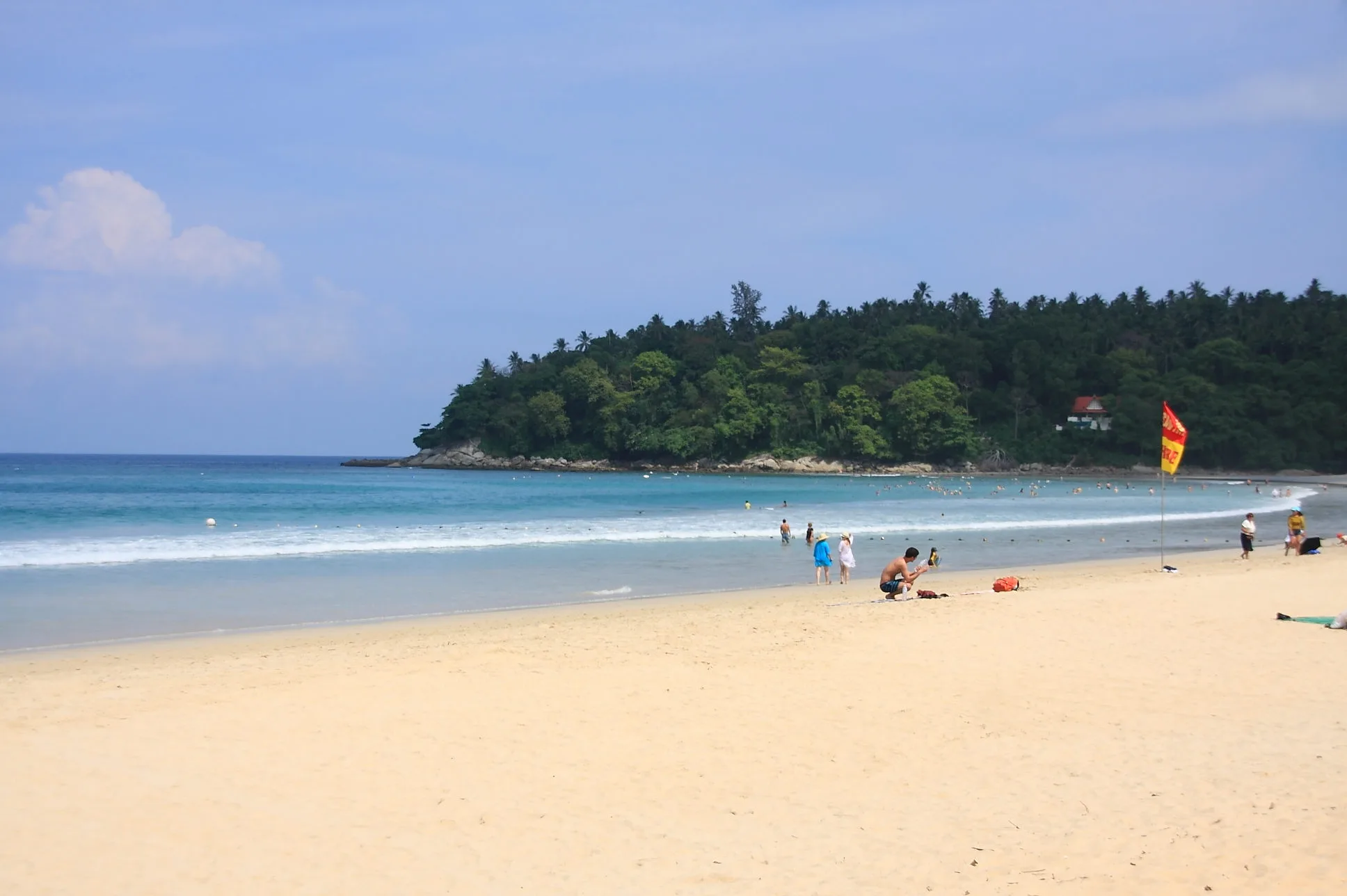
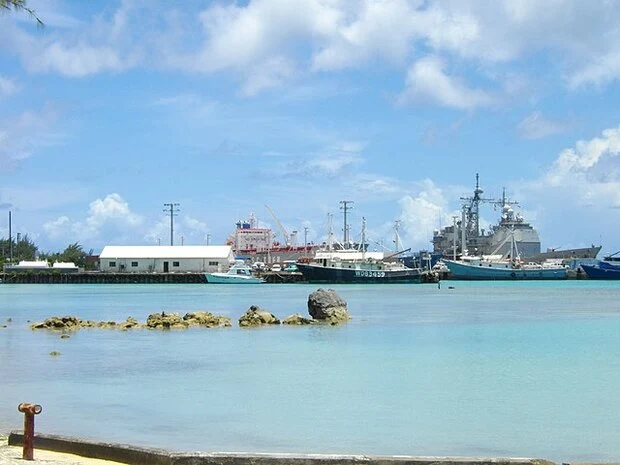
His Majesty the Emperor visited Saipan
2021-06-27
Category:South Korea I'm participating in the ranking.Please click and cheer for me.
Korean organizations opposed to Emperor Akihito's visit to Saipan
In 2005, the Emperor and Empress visited Saipan to pay their respects to the war dead.In response, a protest demonstration was held by a Korean group.It seems to be the idea that the Emperor's memorial service for the war dead is the revival of militarism.
Angered by the movement, Saipan residents shouted, "If Koreans protest against the Emperor, let's boycott Korean companies," and John Blanco urged native Chamoros and Carolina residents to boycott Korean companies if Koreans hold scheduled protests next Tuesday.Nevertheless, the Saipan Korean Association spread out banners and staged a demonstration demanding an apology from the Emperor.
MEMO The Japanese probably don't understand the idea that visiting the memorial is the revival of militarism.It was the same for Saipans.
Angry Chamoros
An old Chamorro woman rose to her feet."How rude of the Emperor to come to the memorial service!I won't forgive you!" he exasperated, "You guys get out of Saipan."Don't do anything selfish on our island," he told local residents and the media one after another.As a result, many Chamoros supported the demonstration, and it developed into a huge demonstration to welcome the Emperor.
It was the 60th anniversary of the end of World War II, when the Emperor and Empress visited Saipan with a warm welcome on June 27th and 28th.
POINT Korea justifies anti-Japanese demonstrations regardless of where they are.Saipan residents got angry at this and developed into a welcome demonstration for the Emperor.
I'm participating in the ranking.Please click and cheer for me.
Yoon Seok - yeol (41.4%), [KSOI Korea]Lee Jae - myung (36.2%), and Lee Seok - yeol (41.4%), respectively. According to a survey of 1,004 adult voters nationwide from June 14 to 15, 41.4 percent of Yoon, 36.2 percent of Lee and 9.6 percent of Ahn.Yoon's approval rating rose 6.2 percentage points from Jeonju, while Jung's approval rating dropped 5.5 percentage points from 15.1 percent.Lee also lost 1.4 percentage points.Sim Sang Jung Justice Party candidate Kim Dong-young and Shinbo candidate Kim Dong-young received 3.6 percent and 0.9 percent respectively.
The approval rating gap between Lee and Yoon is 5.2 percentage points, but Yoon's approval rating has recovered to 40 percent in five weeks.Yoon also recorded 44.6 percent in Seoul, ahead of Lee (35.5 percent).
In the survey, 24 percent of respondents said they were progressive, the lowest percentage since February last year.Conservative tendencies were 34.8 percent, middle-income groups 24.9 percent, and unknown groups 6.3 percent.Regarding the nature of the next presidential election, 50.3 percent of the respondents chose "regime trial" and 36.5 percent chose "regime re-creation."Regarding the influence of television discussions on candidates, 60.8 percent said they would have an impact, while 35.4 percent said they would not.The survey was conducted using ARS (Automatic Response System) using mobile phone virtual numbers provided by telecommunications companies.
Korea claims that the Korean Peninsula has been modernized even without the Japanese rule: Korea does not know the prerequisites for modernization
There was a YouTube video by a pro-Japanese Korean who showed South Korean youth photos of the country before and after the Japanese occupation, showing the state of development at that time. The performers were all surprised and said it was the first time they had seen it, and they were also surprised to hear that the population had doubled and lifespans had doubled.
However, they all said that although it is clear that the country developed during the Japanese colonial era, it is still true that Japan invaded. He was unable to explain the counterargument that the Korean Peninsula would have developed even without Japan.
The photo of a unicycle ridden by yangban (Korean aristocrats) is interestingly introduced as a photo of the time before development, but as I have posted in the past, this one photo explains everything about this answer. . At that time, there was no technology to make wheels on the Korean Peninsula. And four slaves are supporting a unicycle.
Modernization was triggered by the Industrial Revolution, and the Industrial Revolution was a revolution in power, and the steam engine was a mechanism and machine that transferred large amounts of energy to gears and converted it into another repetitive motion. If you can't make wheels, it's impossible to make any industrial machinery. However, this is a technical matter, and even if one were able to learn how to make one and create one, it would be impossible to modernize it.
A necessary condition for the industrial revolution is that a mobile labor force, the proletariat, must exist in society. Production becomes possible only when the labor force is replenished in industries that can develop. In the society of the time, where slaves were slaves to the yangban, this would have been impossible. These are things that always come up when explaining the industrial revolution.
The Meiji Restoration abolished the shogunate system and liberated citizens from the land, creating a mobile labor force. It was Kim Ok-gyun who tried to achieve these goals on the Korean peninsula, but the Gashin Coup failed and Kim Ok-gyun defected to Japan, but was assassinated in Shanghai. Unless the class system can be abolished from within the Korean peninsula, modernization will never be possible.
Yoon Seok - yeol wins the 20th presidential election...with a narrow margin of 1 percentage point.
Yoon Seok-yeol of the opposition party won the 20th presidential election by a narrow margin of 1 percent.Conservative parties have taken back the chair where pro-China and pro-North Korean left-wing presidents sat for five years.Yoon strongly criticized the Moon Jae In administration's policies and is eager to improve relations with Japan by taking a pro-U.S. stance.However, there are many concerns.
The future of the Korean economy, which relies heavily on the Chinese economy, is uncertain because the Democratic Party won about 60% of the seats in the 2020 general elections and Yoon Seok-yeol mentioned the deployment of THAAD.And even if Japan is eager to improve relations, it is based on Japan's apology and compensation, and in fact, it is drawing a starting line in the same place as the Moon Jae In administration.
The Japanese government is expected to remain parallel for a while because it is difficult to change its position that it has already been resolved through the Japan-South Korea Claim Agreement and the Japanese Military Sexual Slavery Agreement.However, the anti-Japanese movement is expected to subside as Korea's anti-Japanese sentiment is limited to Japanese Military Sexual Slavery and recruitment issues, but the Japanese government is expected to use U.S. power to demand an apology from Japan.
The election results are close to 1%, so regions with significant results are:
North Gyeongsang Province: 72.83% for Yoon Seok-yeol, 23.73% for Lee Jae-myeong
North Jeolla Province: 83.05% for Lee Jae-myeong, 14.36% for Yoon Seok-yeol
South Jeolla Province: Lee Jae-myeong 86.22%, Yoon Seok-yeol 11.34%
Gwangju Metropolitan City: Lee Jae-myeong 85%, Yoon Seok-yeol 12.56%
The difference is between 5% and 20% at most, regardless of which of the four regions is dominant.In any case, Lee Jae-myung's approval rating is close to 1 percent depending on the Honam region.Lee Jae-myung won only in Gyeonggi Province, Sejong Special Self-Governing Province, and Jeju Special Self-Governing Province.I heard that Moon Jae In also became president with the support of the Honam region.This is an enthusiastic pro-China anti-Japanese area, and this is probably the central area where they want to sell their seafood by inciting harmful rumors of Fukushima Prefecture seafood and criticizing Fukushima treated water.
First of all, it's a good thing that a conservative president takes office as a choice for better one, but Japan needs to calmly identify the other person.
communist program quoting the New Deal congratulatory address for Moon Jae In 2021 Independence Day
The Korean version of the New Deal, which will invest 220 trillion won by 2025, is a roadmap for becoming an innovative and inclusive country centered on people and a development strategy for a country that will take a new leap forward. The government has made the Human New Deal another pillar of the Korean version of the New Deal, along with the Digital New Deal and Green New Deal. We will establish a social safety net, such as the abolition of employment insurance and living allowance support standards for all citizens, and lead the transition to digital and green through investment in people.
-------------------
The New Deal is interpreted as a bold intervention by the U.S. government in the market economy during the Great Depression and as a intervention to free competition to rebuild the Great Depression.And what's the Human New Deal?I mean, you're going to intervene there, too.
In his congratulatory speech last year, he said, "The Korean version of the New Deal is a new social contract for co-prosperity, a promise to strengthen employment and social safety nets, increase investment in people, and achieve prosperity and co-prosperity."What is a nation centered on people? Have Korea always been centered on dogs or cats?What's the investment in people? Wasting money is not the investment, is it?
What Moon Jae In is doing is simply government intervention to move toward communism.