Death toll from Halloween Shogi chess accident in Seoul rises to 151 - Different countries respond differently to similar accidents.
2022-10-30
Category:South Korea I'm participating in the ranking.Please click and cheer for me.
Fatal accident occurs on Halloween in Seoul
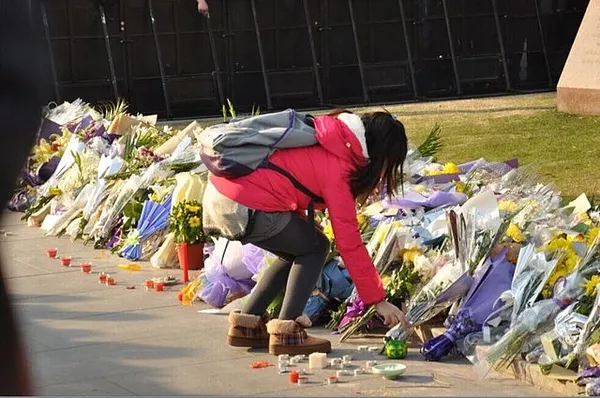
The number of people killed in a shogi accident during Halloween in Seoul has increased to 151. This is the worst accident in terms of man-made disasters. This accident reminds me of the Akashi fireworks festival accident in Japan and the New Year countdown accident on the Shanghai Bund in China. Shogi accidents occur when players are pushed from behind in a crowded crowd, or when they step on someone else's foot and lose their balance. This chain causes a major accident.
Akashi fireworks festival accident for which police were held responsible
This also happened during the Akashi Fireworks Festival, and 11 people died. However, it is impossible for the people who disrupted that arrangement to be held responsible. Problems with the police and security were investigated day after day, and in the end, a civil court ordered Hyogo Prefectural Police and the security company to pay damages. The conclusion is that it was foreseeable and that the necessary measures were not taken. In the criminal trial, one police officer and one security company were sentenced to 2 years and 6 months in prison , and 3 city employees were sentenced to 2 years and 6 months in prison, suspended for 5 years was found guilty.
Shanghai accident started with suspicious report
Next, regarding the incident in Shanghai Bund, I was in Shanghai on the day of the accident. A Chinese person I spoke to the next day asked me, didn't you go to the Bund last night? I found out when I was asked. According to the news reports after the accident, 36 people were said to have died. From then on, it turned out to be a complete lie. On New Year's Eve, Shanghai was in a state of chaos, with people rushing to the point where it was difficult to walk, not only on the Bund, but also everywhere, including the station premises, and it would have been no surprise if an accident occurred anywhere. . If it was an accident during the New Year's countdown on the Bund, it was clear that 36 people would not have been there .
China returns to the responsibility of the people
Afterwards, I was looking into how this incident was summarized in China, and came across an article called Expert Opinion. "Increase public awareness of safety, avoid danger, and avoid crowded places." In other words, public responsibility for gathering too much. It was not intended to hold the government or police responsible.
How will South Korea sum up this issue
There was clearly a problem with the accident in Seoul, and it was a catastrophe in which many people died. Maybe it's because it happened right after the accident, but when I look at articles from South Korea, there doesn't seem to be any complaints about the lack of police or security. In Japan, a ruling after the accident increased the responsibility of the police and security companies for events where large numbers of people gather, resulting in an increase in the safety of citizens .
POINT Shogi falling accidents occur in various countries, but the way each country views and deals with the problem is completely different. How will South Korea summarize this accident?
I'm participating in the ranking.Please click and cheer for me.
South Korean President with 28% Approval Rating - Breaks Promises to China if Seeking Relations with Japan - Country that Breaks Promises to Japan if China [Contents]
South Korea's new president with low approval rating
It's advantageous if you don't make achievements
Anti-Japanese Appeal on the Takeshima Issue
China just waits and sees
Change of government will change things
President Yoon Seok-yeol's approval rating is 28% (according to Gallup Korea survey), and he has been facing a tough fight since he took office. Since the administration began as a lame duck in the first place, there is no change in the situation where the government cannot move unless the power of the people wins the 2024 general election.
Looking ahead to 2024, the Democratic Party of Korea, which is the enemy, will be at a disadvantage if President Yoon produces results and achievements. There is no mistake in going on the offensive of not letting the president do anything.
Although President Yoon Seok-yue has appealed for the improvement of Japan-South Korea relations, he is willing to make concessions on the Takeshima issue, such as by conducting marine surveys around Takeshima. Even at this stage, he is ridiculed as a pro-Japanese president or a betrayal president. In any case, from a Japanese point of view, it can only be seen as a double standard.
As for China, as was the case with Moon Jae-in, it seems that they are just watching the future of this administration.
The deployment of THAAD under the Park Geun-hye administration cooled relations between China and South Korea, but under the Moon Jae-in administration, they exchanged promises with China about the three non-compliances, and the current president has declared that he does not know about the three non-compliances.
Right-wing and left-wing South Korea have a unique structure of pro-U.S./pro-Japan and pro-China conflicts, and they seem to understand well that a change in government can lead to a major change in diplomatic policy.
In the first place, isn't there a question in South Korea about where the national ideology of South Korea, which goes back and forth between liberal democracy and socialist dictatorship, lies? On the contrary, they are constantly intimidatingly questioning each other about meaningless alternatives, whether they are pro-Japanese or anti-Japanese.
South Korea, where anti-Japan precedes the national ideology of democracy or socialism. Any problem can be dwarfed by anti-Japan fire, making it a very easy tool to use politically.
The people's trial that began in the wake of the Itaewon accident - The horror of a country where all citizens think they are jurors
Is President Yoon responsible for the Itaewon accident?
A surprising public opinion poll
The police have administrative jurisdiction and are under the jurisdiction of the prefectural police
Is the president in charge of Halloween?
It appears that a candlelight demonstration was held in Itaewon, Seoul on Halloween in the name of commemorating the victims. South Korea is apparently the country of demonstrations, but organizers said ``50,000 people gathered.'' Police estimate the number of participants to be 9,000. The purpose seems to be to hold the current President Yoon's administration responsible for the Itaewon accident and demand his resignation.
A public opinion poll was conducted, and found that the government was responsible for the Itaewon disaster.73.1% said it was responsible, 23.3% said it was not responsible, and 53% said it was extremely responsible. Considering whether the decision should be based on public opinion polls in the first place, I wonder if South Korea's famous all-citizen jury trial system has started again. In the first place, it must be said that he is in a state of cessation of thinking, meaning that he does not have the composure to analyze the responsibility and causes of the problem.
Japan's police force is handled by the National Police Agency, which has administrative jurisdiction. The National Police Agency will be positioned as a special organization within the Public Safety Commission, which is an external bureau of the Cabinet. Rather than directing and supervising the National Police Agency on individual cases, the Public Safety Commission sets general policies and supervises whether they are being operated appropriately.
As it is an administrative organ, the main body of work lies with local governments, and prefectural police are responsible for accidents and incidents that occur under their jurisdiction. Hyogo Prefectural Police was held responsible for the Akashi fireworks display accident, and Nara Prefectural Police was held responsible for Abe's assassination.
They seem to be claiming that the president is responsible for the Itaewon accident, but that is not the case at all under Japanese law. What about Korean law? Normally, responsibility should be assumed by the person in charge, but does this mean that President Yoon should grasp the details of the security system and issue instructions regarding Halloween security? Or should we have decided by presidential order that this is how we should enjoy the Halloween festival?
His Majesty the Emperor visited Saipan
In 2005, the Emperor and Empress visited Saipan to pay their respects to the war dead.In response, a protest demonstration was held by a Korean group.It seems to be the idea that the Emperor's memorial service for the war dead is the revival of militarism.
Angered by the movement, Saipan residents shouted, "If Koreans protest against the Emperor, let's boycott Korean companies," and John Blanco urged native Chamoros and Carolina residents to boycott Korean companies if Koreans hold scheduled protests next Tuesday.Nevertheless, the Saipan Korean Association spread out banners and staged a demonstration demanding an apology from the Emperor.
The Japanese probably don't understand the idea that visiting the memorial is the revival of militarism.It was the same for Saipans.
An old Chamorro woman rose to her feet."How rude of the Emperor to come to the memorial service!I won't forgive you!" he exasperated, "You guys get out of Saipan."Don't do anything selfish on our island," he told local residents and the media one after another.As a result, many Chamoros supported the demonstration, and it developed into a huge demonstration to welcome the Emperor.
It was the 60th anniversary of the end of World War II, when the Emperor and Empress visited Saipan with a warm welcome on June 27th and 28th.
Korea justifies anti-Japanese demonstrations regardless of where they are.Saipan residents got angry at this and developed into a welcome demonstration for the Emperor.
Looking at Mr. Yoon Suk Yeol's argument, the content of the liberal camp, which is the opposite of the pro - China and pro - North Moon Jae In administration
- Regarding diplomacy: Diplomacy is not visible in the Moon Jae-in government. His philosophy and values are also unclear. A clear value system should make our future predictable, but this is lacking.
These include the rule of law, liberal democracy, the value of human rights, and a codified international legal order. We must maintain and develop relationships between countries that share this same understanding.
[Yin Seok-yue's claim]
Regarding historical issues: We must always clearly define past history based on truth, and point out what needs to be pointed out. In matters of reality and the future, the interests of the people and the nation must be considered. After all, it's for future generations.
About Kim Jong-un: Kim Jong-un is judged to be a dictator in the light of modern civilized nations and liberal democratic systems. At the same time, he is a very decisive figure for the denuclearization of North Korea, for the Korean peninsula and for sustainable world peace, so he is a partner who must keep an outlet for dialogue open.
Security and defense: The right direction is for the United States to strengthen the expansionary restraint it provides to friendly countries through intercontinental ballistic missiles.
About the United States: The Biden administration of the United States is determined to overwhelm China with cutting-edge technology and to bring its standards to China. Global business will be difficult to establish if companies turn their backs on the United States, so the government must lead companies with ``strategic clarity.''
THAAD: Regarding the deployment of the THAAD system, it is ``clearly our sovereign territory,'' but it is a ``horizontal relationship with China.''
Regarding China: In order to insist on withdrawal of THAAD deployment, China must first withdraw long-range radars deployed near its own borders. Fulfill the agreement to normalize relations between South Korea and China unless additional THAAD deployments are made.
Contents are normal. The impression is that it follows the trend of the latter half of the Park Geun-hye administration. Since it is difficult to win with the current point difference, the focus will be on how concrete this content can be and whether it can create a message that can gather floating votes.
Anti - Japanese professor Seo Kyung - duk asks Apple to refer to Dokdo throughout the world? I don't like him even though he was considerate to Korea. [Donga Ilbo translated article]
Seo Kyung-deok, famous for being anti-Japanese
Takeshima is commonly known as Liancourt Reef
I don't like it even though I took South Korea's claims into account
Does the entire world insist that Takeshima become Dokdo?
No concessions to that country
Seo Kyung-duk, a professor at Seong-Shin Women's University, has decided to change the name of Dokdo for each country in relation to the fact that Korea's ``Dokdo'' appears differently depending on the language settings in Apple's iPhone map application. The company announced on the 20th that it will consider whether to protest in the future.
On the morning of the same day, Professor Seo posted on his social networking service (SNS), ``How will Dokdo and the East Sea be represented in each country on Google Maps, the map app most used by people around the world in 2019?'' ``As a result, netizens living in 26 countries reported that all of Dokdo can be searched for ``Liancourt Rocks'' on Google Maps.''
It goes on to say, ``Dokdo is only accurately described in South Korea, and Google Map searches in Japan show ``no results'' or ``Takeshima'' (Takeshima, the name of Dokdo claimed by Japan). ``We have been steadily protesting to Google, but changing the name to ``Dokdo'' was not easy.''
``Recently, when the language is set to Korean in the Apple iPhone map app, ``Dokdo'' is correctly displayed, but when it is set to Japanese, it is written as Takeshima. "After doing so, please provide information on how Dokdo and the East Sea should be represented on the map installed on the iPhone."
Meanwhile, the issue of Apple's guidance on the notation of Dokdo came to the fore on the 18th, when the private cyber diplomatic mission 'Bank' (VANK) officially raised the issue. At the time, Bank said, ``It is a clear mistake for Apple to refer to South Korea's Dokdo differently depending on the language in which it is designated, and Coms.'' ``We will send a protest letter requesting that this be corrected, and we will also carry out a rectification campaign.'' "I guess so," he argued.
I think that the Japanese people are starting to realize this recently, but making concessions to that country is a no-no. If they think so, then it's a matter of luck if they think it's okay to make concessions to this extent. They just think that because the other side has given in, they can go further and further.