Why did President Tsai Ing - wen invite Kyoto Tachibana High School to the Double Ten Festival? - Taiwan's future entrusted to future generations.
2022-10-27
Category:Taiwan I'm participating in the ranking.Please click and cheer for me.
Kyoto Tachibana High School where Taiwan is crazy
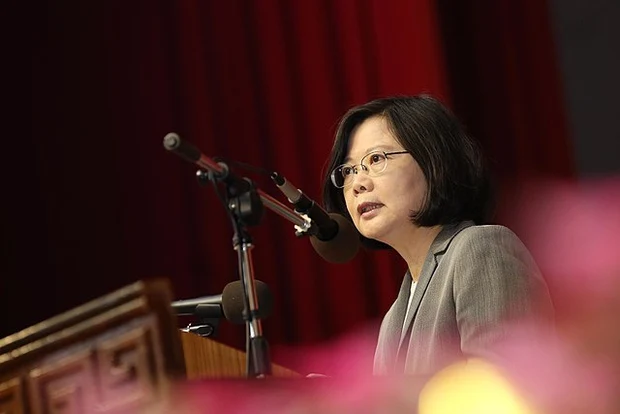
Regarding why Kyoto Tachibana High School's brass band (Orange Devil) was invited to Taiwan's National Foundation Day ceremony, President Tsai Ing-wen looked ahead to the presidential election in 2024 and asked the next generation who will have the right to vote at that time. It appears that Kyoto Tachibana High School was entrusted with a strong message. In the last presidential election in Taiwan, President Tsai Ing-wen came from behind to win despite being at an overwhelming disadvantage. The Taiwan Democratic Progressive Party itself analyzes that the reason for this is that young people are heading to the polls. It is said that the younger generation in Taiwan is starting to develop a sense of democratic values.
Japan's national defense and the Taiwan Strait issue are inseparable
Japan should think more seriously about its national defense. There is no objection to considering the Taiwan Strait as an issue that is inseparable from Japan's national defense. What is needed to achieve this is strengthening Japan-US relations and discussing constitutional revision. But is that enough?
Taiwan's democratization is a recent event
Taiwan's democratization began with the direct election of the president in 1996. It was written by former President Lee Teng-hui, who passed away recently. Has Taiwan followed the path of democratization smoothly since then? The first summit meeting between China and Taiwan was held under former President Ma Ying-jeou before President Tsai Ing-wen. There, former President Ma Ying-jeou and Xi Jinping held a meeting, reaffirming the 92 joint formula and returning to the one-China principle. That was in 2015.
Danger of being swallowed up by China in the next election
Although Taiwan is a young democratic country, it is on the verge of strong growth. If the Democratic Progressive Party loses in the 2024 presidential election, Taiwan, one of the few democratic countries in Asia, may never smile again. Xi Jinping will try to intervene in Taiwan's presidential election in every possible way.
Japan should convey the value of democracy
Kyoto Tachibana High School showed that there are many things Japan can do. Our goal is to show young Taiwanese through a variety of content that on the path to democracy there is a world where free people can realize their dreams. Taiwan considers Japan to be its democratic predecessor. The Japanese media, which should be primarily responsible for this, seems to be controlled by China.
I'm participating in the ranking.Please click and cheer for me.
Will Taiwan Become a Key Hole in China's
The Tiananmen Square incident will be remembered as China's democratization movement.Even tanks were deployed to eliminate the movement to democratize students and young people.Next is the Hong Kong demonstration.China has consistently reported this as violent behavior.
The Tiananmen Square incident was suppressed by the Communist Party of China, which feared the pro-democracy movement would spread all over the country.The Hong Kong demonstration was also threatened by the enactment of a national security law and armed intervention from the mainland.In Chinese, the demonstration is called a demonstration parade, and it uses Chinese characters meaning marching while demonstrating its power.If the demonstrations are tolerated and the pro-democracy movement is successful, China will fall apart and disintegrate in the air.
The Hong Kong demonstration has been reported as an incident in which rioters were suppressed in China.If Taiwan becomes independent, the shock in China will be immeasurable.
I think Taiwan and China are different countries, but they are different in China.Taiwan is recognized as part of China.Taiwan's independence means that China's one country, two systems, such as Hong Kong and Macau, will become independent.The impact of this incident on China is expected to be enormous.Considering the impact of Taiwan's independence on other ethnic areas and autonomous regions, the Chinese government is on high alert.Uighur and Tibet are China's resource areas.If foreigners leave China, it will be a serious blow to China's economy.
The Chinese think face is important.If you lose your face, you'll blush and get angry.The territorial issue is a disgrace to China.In response to Chiang Kai-shek's attempt to resolve the Rohgyo Bridge incident peacefully with Japan, Mao Zedong criticized it as a weak stance and advertised it to the people and entered the Sino-Japanese War.In response to Japan's nationalization of the Senkaku Islands, Xi criticized former President Hu Jintao for trying to settle the matter peacefully and withdrew him from his post.For China, the loss of territory or independence is a great loss to the face of the Communist Party government.Xi's obsession with Taiwan is immeasurable.
In addition to Taiwan, China also has areas that sing one country, two systems, including Hong Kong and Macau, and autonomous regions such as Inner Mongolia, Guangxi Chihuang, Tibet, Xinjiang Uighur, and Ningxiahui.
The right of collective self-defense assumes a Taiwanese emergency - Former Prime Minister Aso mentioned the possibility that an invasion of Taiwan would extend to the waters near the Senkaku Islands.
On July 5, former Prime Minister Aso gave a speech in Tokyo, stating that if China were to invade Taiwan, it would be recognized as an ``existence-endangering situation'' under national security-related laws, and the right of collective self-defense could be exercised to a limited extent. He acknowledged that it was possible. Currently, Japan does not recognize Taiwan as a state, so Taiwan itself is outside the scope of the right of collective self-defense, but both China and Taiwan claim territorial rights to the Senkaku Islands, and China has made an armed invasion of Taiwan. It can be interpreted to include the Senkaku Islands if a naval blockade of Taiwan is implemented.
Will the premise be that the right of collective self-defense will be exercised under the condition that the United States enters the war, or will the Japan-U.S. alliance be activated while Japan exercises its right of self-defense in the event of a naval blockade? Is it? The United States uses the name Taiwan as a military name. The Biden administration has announced that there will be no change in its interpretation of the One China Policy. On the other hand, Japan has confirmed that the defense of the Senkaku Islands falls within the scope of the Japan-US Security Treaty. Regarding the defense of Taiwan, although the U.S.-Taiwan Relations Act mentions the provision of weapons, it does not specify whether the U.S. military will be involved in the defense of Taiwan, leaving some ambiguity.
If China were to invade Taiwan, there is a possibility that Japan would join the war, assuming that the U.S. military would join the war.
Considering the meaning of Deputy Prime Minister Aso's remarks, it is unlikely that they will be put into action unless they include military exercises between Japan, the United States, and Taiwan. Without military exercises, there is no way that the right of collective self-defense would be accompanied by the power to implement it. This will be a major focus in the future. We may see the Self-Defense Forces entering Taiwan for military exercises.
The US military has announced that it is conducting joint military exercises with Taiwan. It is not possible to create an action plan without conducting military exercises on-site to determine what kind of operations could be carried out in the terrain and environment of Taiwan's west coast in the event of an actual battle. There needs to be a concrete discussion about what is necessary for Japan to exercise its right of collective self-defense.
In order to exercise the right of collective self-defense, the Self-Defense Forces will need military training that simulates the Taiwan Strait in order to function effectively.
Heartwarming support from the Taiwan Foundation to help victims of the Great East Japan Earthquake.
Taiwan donated more than 25 billion yen to the Great East Japan Earthquake.This is the largest in the world.March 16, five days after the earthquake.A group of people wearing white pants, white hats, and navy blue jackets arrived in Oarai, Ibaraki Prefecture.
The organization is a Japanese branch of the Buddhist Foundation for Charity in Zhugei, Taiwan, and is a Buddhist charity founded in 1966 by the Taiwanese nun Master Sheng Yuan.Although it is a group centered on nuns, many men and women of all ages participate in volunteer activities.
Before dawn, they left Tokyo for Oarai-cho, Iwate-ken Ofunato, Rikuzentakata, Miyagi-ken Ishinomaki, Kesennuma, and other severely damaged places to cook curry rice, fried beef, pork soup, and miso soup.There are few people in Tohoku who don't know about the help, but there were few media reports.
This is not the only relief aid for the disaster-stricken area.They distributed cash directly to the victims.Local residents came to government offices, community centers, and assembly halls, and gave 50,000 to 70,000 yen per household and 20,000 yen to people living alone.I heard that they worked with local government offices to make sure there was no omission in distribution.
The applicant said, "Taiwan Buddhist organizations distribute cash, so representatives of each household are asked to gather at the community center.My father went to my house, but I got 50,000 yen just by checking the household list.It was a heartwarming event in a state of uncertainty.That money gave us peace of mind," he said with tears in his eyes.
Two months after the earthquake, Taiwan's Ministry of Transportation and Tourism provided free support for 1,000 victims from Iwate, Miyagi and Fukushima Prefectures to Taiwan for six months from May 2011.In addition, Taiwan was the first country to send tourists to the Northeast after the earthquake.Support from Taiwan continued in reconstruction and construction after the earthquake.
Quote: DIAMOND online
Support from Taiwan was huge through the Japanese Red Cross, but private support was sent many times as much to the disaster-stricken area.
The Chinese Communist Party's economic takeover - dependence on the Chinese economy is the same as being taken over - young people with no vested interests are the key.
Xi Jinping's strategy
Will peaceful dialogue be possible
Reach for any target
Taiwan was one step away from unification
At the 110th Anniversary of the Xinhai Revolution, President Xi Jinping cited the "One China" principle and the "1992 Consensus" based on it, and stated that the two countries would "promote the peaceful development of cross-strait relations." This is a worrisome statement, considering that he will never do the right thing in terms of Taiwan policy. On October 4, a record 56 Chinese aircraft entered Taiwan's airspace. Since the beginning of October, there have been a total of 149 airspace intrusions, but by the 5th, this had dropped sharply to just one aircraft.
Biden has called for peaceful dialogue with democratically elected leaders, but the issue remains focused on Taiwan's next presidential election. If Taiwan's next president becomes pro-China and moves toward unification with China, the United States will not interfere as long as the conclusion is reached through peaceful dialogue. It also means.
Direct bribery of politicians seems like something out of a TV drama, but China's strategy is much more elaborate. Communist Party members are reaching out to politicians' families, relatives, friends, politicians' support bases, and organizations.
If politicians' supporters were given huge amounts of wealth through business with China, they would easily turn over, and they would sniff out cheating, traffic accidents, tax evasion, minor legal violations, etc. of the politicians themselves and those around them. Collect information. To do this, they will use all sorts of methods, including hacking and wiretapping communication devices, and installing mechanisms to send information to the Chinese Communist Party into the communication devices themselves.
Before President Tsai Ing-wen, the era of President Ma Ying-jeou was one step closer to unification. Young people's votes played a key role in President Tsai Ing-wen's re-election. The key to the next election will be how to encourage young people, who have fewer business interests and other interests, to vote.
Will Miss. Chou Ting's message reach Taiwanese youth? - What is the ripple effect of his declaration of asylum in Canada?
After Miss. Chou Ting announced his intention to seek asylum in Canada, Hong Kong police said they would do everything in their power to arrest him since the December 29 deadline for his return to the country had passed. Mr. Shuba also mentioned the existence of secret police and the danger of being targeted by spies. He went to Canada to study abroad in September 2023.
The Hong Kong protests are said to have been triggered by China's National People's Congress's decision in 2014 to restrict the number of candidates for the post of chief executive of Hong Kong. At this time, a large demonstration occurred and was also called the Umbrella Movement. Since then, demonstrations against the enactment of the Fugitive Offenders Act and the National Security Act have continued to grow in scale and have been reported around the world. Mr. Shutei is considered to be one of the central figures.
The enactment of these laws will be seen as a de facto collapse of one country, two systems, and investment in Hong Kong from various countries will be withdrawn one after another, accelerating China's current isolation. Mr. Shuba was subsequently arrested and detained, but the charges were relatively light and he was sentenced to 10 months in prison, although he was actually released after about 6 months.
It appeared to be an attempt by the Chinese government to suppress the demonstrations and appease the ringleaders. I wonder if it means that they don't want to provoke the students any more, or they don't want to provoke other countries, but what happened after that was Mr. Shuba's study abroad. I was honestly surprised by this as well. I wonder if a person who incited the people and caused a large-scale demonstration in China could study abroad.This seems like a placating measure, but I imagine that Taiwan could be an extension of this.
It is said that students from the Sunflower Movement in Taiwan taught Hong Kong students how to demonstrate. This led to large-scale demonstrations in Hong Kong, and the enthusiasm returned to Taiwan, leading to a dramatic come-from-behind victory in Taiwan's presidential election in 2017 for Tsai Ing-wen, who was said to be at a disadvantage. Taiwan will become the next Hong Kong. The younger generation's sense of crisis about the end of Taiwan's democracy had a major impact on electoral behavior. If the spark was smoldering in Hong Kong, it could once again influence Taiwan's elections. On the other hand, the fact that Mr. Zhou Ting is able to study abroad in Canada freely could be used to appeal to young Taiwanese people.
This is a de facto declaration of asylum at this timing. The timing of the Taiwan presidential election was probably decided to be at the end of this year because it was held on December 3rd, Miss. Chou Ting's birthday, and the deadline for returning to Japan was December 29th. is January 13, 2024. If the Chinese government had been aiming for a placating policy, the message that Mr. Zhouting's life was in danger was the complete opposite, and the news was sure to reach Taiwan as well. The goddess of democracy is alive and well.