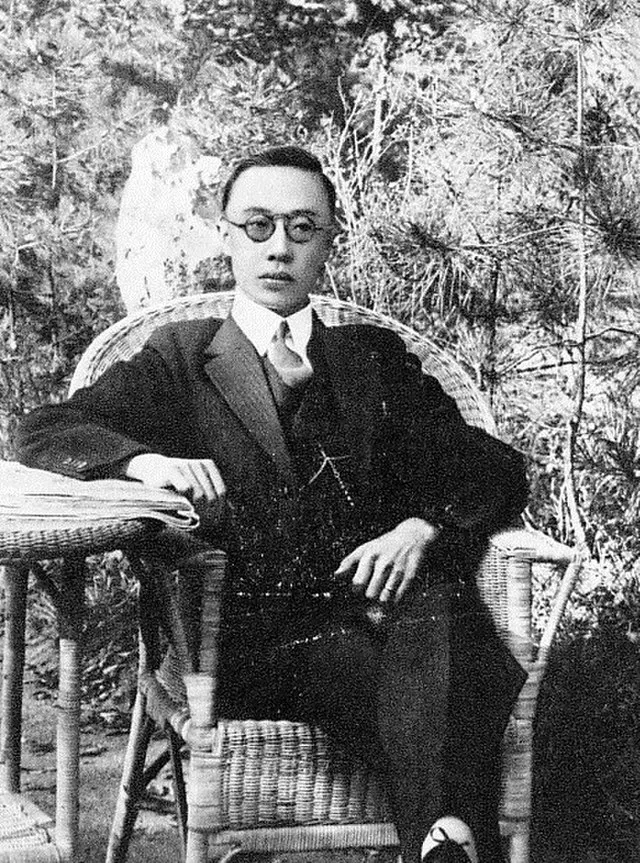
The Last Emperor who appeared at the Tokyo Trials The last emperor of the Qing Dynasty and the first emperor of Manchukuo looked at the times.
2022-07-30
Category:China I'm participating in the ranking.Please click and cheer for me.
The Last Emperor appeared at the Tokyo Trial
The last emperor of the Qing Dynasty was Aixinjueluo Puyi. He was also called the Last Emperor and appeared at the Tokyo Trials. There, in front of GHQ, he praised Sun Yat-sen's Xinhai Revolution as an innovative move for China, and said that the Qing bureaucracies at the time were deeply corrupt.
The Xinhai Revolution was a Chinese revolution supported by Japan
The Xinhai Revolution was a Sino-Japanese joint revolution that was supported by important Japanese figures to modernize China under the rule of the former dynasty. Sun Yat-sen is Sun Yat-sen. Nakayama is a Japanese name, and it was the name of his time in exile in Japan. Puyi understood this very well.
Manchuria was a territory of the Qing Dynasty that Russia came to take over. The Qing Dynasty was a Chinese dynasty founded by the Manchu people, that is, by Puyi's ancestors.
The revolution had no choice but to join forces with the old dynasty forces
The Xinhai Revolution had to rely on Yuan Shikai's help to suppress the Beiyang warlords, and it cannot be denied that it was a half-hearted revolution, so Puyi's conditions of residence in the Forbidden City were revoked and he was exiled.
Russia's hand extended to the continent and peninsula
The conflict between Russia's interests in Manchuria and the conflict on the Korean Peninsula progressed simultaneously. Russia thought it would be a good idea to colonize China, the Korean Peninsula, and Japan in the same way as Northeast Asian nations.
The Russo-Japanese War not only stopped the Russian colonization of the Korean Peninsula, but also eliminated Russian interests from Manchuria and led to the establishment of Manchukuo. Puyi then became the first emperor of Manchukuo.
The idea of harmony between the five tribes of Manchukuo
Puyi, a Manchurian, was expelled from the Forbidden City and ascended the throne again in his homeland. Many workers came and went from the Korean peninsula to Manchuria, and many people from the Korean peninsula immigrated to cultivate the fertile land of Manchuria. Manchukuo's spirit of ``Five Tribes Harmony'' is an ideal that was built on the reality that these ethnic groups coexist: Japan, Korea, Manchuria, Mongolia, and the Han Chinese.
It is said that Japan was carrying out plunder and genocide on the Korean Peninsula. It's strange.
I'm participating in the ranking.Please click and cheer for me.
The acquisition of African countries by the world's underground financial institution AIIB is China's national strategy.
AIIB is the world's black finance. Lending money to developing countries to realize OBOR. They provide funds that cannot be repaid, and when they are unable to repay, they seize the country's ports and other facilities. If OBOR is realized, the countries in the area will become rich. That's why it's better to borrow more and more money.
With this financing, China bought up votes in the United Nations, including African countries.
Originally, the African continent was divided into two colonies, British and French, and the British Commonwealth and French Community held the vote in the United Nations, but what is the situation like now? OBOR is China's national takeover strategy.
Communism views capitalists and managers as enemies. Workers become subordinate to capital, and capitalists who acquire large amounts of capital become figures that shake up the nation. Therefore, Chinese companies are controlled by the state as state-owned or semi-state-owned.
In modern China, the state is the capitalist. They invest in domestic and international development in the name of investing in the region and the nation.
If you look at the fact that they are subjugating developing countries to capital, they are essentially no different from the capitalists they see as their enemies.
In fact, it's even worse.
Four basic documents and four agreements between Japan and China - The difference between Japan - China diplomacy and Japan - Korea diplomacy is that Japan and Korea do not have accumulated diplomat
Four agreements between Japan and China signed with former Prime Minister Abe
Four basic documents during Japan and China
History of diplomacy since the restoration of diplomatic relations
The key to diplomacy amid difficult Japan-China relations
There are no accumulated assets in Japan-Korea relations
In response to the news of Prime Minister Abe's death, a Chinese spokesperson said that he had made a great contribution to the development of Japan-China relations. In 2012, the issue of the Senkaku Islands came to light and anti-Japanese demonstrations broke out, and Prime Minister Abe held a Japan-China summit meeting in APAC and reached an agreement on four points.
Four agreements between Japan and ChinaBoth sides will abide by the principles and spirit of the four basic documents between Japan and China, and They confirmed that they would continue to develop a mutually beneficial strategic relationship.
Both sides reached some consensus on the need to face history squarely, follow the spirit of looking toward the future, and overcome the political difficulties affecting bilateral relations.
Both sides recognize that they have different views on the recent tense situation in the waters of the East China Sea, including the Senkaku Islands, and through dialogue and consultation, prevent the situation from deteriorating and establish a crisis management mechanism. There was a consensus on the need to avoid unforeseen situations.
Both sides agreed to gradually resume political, diplomatic, and security dialogue by utilizing various multilateral and bilateral channels, and to strive to build a relationship of mutual political trust.
These are the four agreements that China often refers to. The four basic documents in item 1 are:
Four basic documents between Japan and China1972 Japan-China Joint Declaration1978 Japan-China Treaty of Peace and Friendship 1998 Japan-China Joint Declaration on Building a Partnership of Friendship and Cooperation for Peace and Development 2008 Japan-China Joint Statement on the Comprehensive Promotion of “Mutually Beneficial Relations”
means.
The first of the four agreements promised that both sides would abide by the treaties and agreements they had signed so far. This also means that Japan-China relations are based on four documents that Chinese spokesmen frequently comment on. Although China is a country with many problems internationally, it is said that China is principled, and this is where the diplomatic axis between Japan and China lies.
Japan-China relations and Japan-Korea relations have completely different positions and histories. However, the biggest difference is that since South Korea has scrapped all previous agreements, there are no diplomatic assets that Japan and South Korea have accumulated politically and diplomatically.
Both China and South Korea have recently become Asian countries that neither of them want to associate with, but their diplomatic relations have completely different histories.
Will Ethiopia's default be the end of African investment? Debt trap derived from One Belt, One Road.
China's One Belt, One Road initiative is set to go even further down the road after Africa's Ethiopia defaulted on the 2nd, unable to pay interest on its debt due in December. The countries circled on the map in the image are the countries where China is primarily investing. Ethiopia, which defaulted this time, is marked in red. One Belt, One Road is a route south to Italy in Europe, but Italy has announced its withdrawal from One Belt, One Road. This is the departure of the western base. Where is Kitaji's base? It is now Kiiv, the capital of Ukraine, which is currently at war.
Yellow countries are those with excessive debt to China. Includes Sudan and Somalia. These are the countries along the Suez Sea, including Ethiopia, which follow the Suez Canal, and China was trying to gain control of the sea route to the Mediterranean Sea. The rationale is simple: once the One Belt, One Road project starts, we can make a lot of money, so why not borrow money and prepare?
South Africa has the highest GDP among African economies, and it can be seen that the countries on the land route to South Africa are also trying to keep it in check. Countries other than the ones circled account for 36.9% of China's investments in Africa, so it is spreading money to almost all countries. The purpose is to buy votes from the United Nations. African countries account for approximately 28.5% of the votes in the United Nations. This is what is behind China and the West, dismissing it as a minority opinion.
This is actually related to the Taiwan Strait issue. Mainly African countries support China's "one China principle." Africa does not want to get into trouble with its creditor country, China, over a faraway island with which they do not have any exchanges.
If the countries along the Suez Sea default, the Belt and Road initiative will end for Africa.
falsification of China's GDP This was revealed after the collapse of the Soviet Union, but only half of its GDP was exist.In the 56 years from 1929 to 1985, national income was 90 times (actually 6.5 times).The average growth rate was 8.3 percent, but actually 3.3 percent.Even U.S. Nobel laureate Paul Samuern believes in Soviet statistics and said the Soviet Union is growing.To that extent, the method of falsifying statistics was meticulous.
The People's Republic of China, founded in 1949, has carried out reforms, but it was the Soviet Embassy that served as the headquarters.Also after Mao Zedong's Cultural Revolution and Deng Xiaoping's reform and opening-up, statistical methods continued.China is not capitalism.When foreign companies establish their own companies in China, they cannot take out the capital they have invested in because it is a joint venture.GDP tampering is effective in attracting foreign investment and does not need to be returned.
China wants to improve relations with the EU at the summit between the EU and China - neutral position to benefit from both sides.
A summit meeting between China and the EU was held on the 1st.At a press conference after the summit, Mr. Fondairaien stressed, "In this war, Europeans will not accept any support for Russia."Xi said, "The international community should prepare the conditions and conditions for negotiations between Russia and Ukraine rather than fuel the fire and intensify the conflict."The meeting revealed that China is using the Ukraine issue to improve its relations with the EU.Some Japanese media say that China should use its position to find a way to solve the Ukraine problem, but it is better not to do so.In a big sense, it is hard to understand why liberal countries have been fighting against China's hegemonism or are trying to cope with the current invasion of Ukraine.
After a ceasefire agreement is reached with Russia, China will provide economic support to Russia at any time, and if it deals with and approaches liberal countries on this issue, it will benefit from it, and if it becomes a leader in the ceasefire, China's international standing will rise.The war should end as soon as possible, but a strange world begins to turn again.The Wigur, the Nansha Islands, Taiwan and Ukraine issues are force-driven changes and should be viewed in the same way as human rights violations.Given the significance of the issues that need to be addressed, it is highly contradictory to expect China, which is the party to the infringement of another issue, just because of the current war in Ukraine.
In the first place, doubts arose about the existence of the United Nations as permanent members of the Security Council, Russia and China.During the Cold War, East and West countries functioned as places for dialogue, but now we are not in a Cold War state, and international organizations are calling for human rights in the world, with non-liberal countries as permanent members of the Security Council.We cannot help but think that Russia and China are not fit to be permanent members of the United Nations, including the Ukraine issue, the Uighur issue, and the Taiwan issue.The world needs an international organization that is without their influence.