The forced labor issue is one that recognizes the annexation of Japan and South Korea as an illegal act and allows claims for compensation for forced labor.
2022-05-29
Category:Annexation of Japan and Korea I'm participating in the ranking.Please click and cheer for me.
Korean Ambassador to Japan proposes subrogation payment
Mr. Yun Deok-min, who has been appointed as the Korean ambassador to Japan under the newly inaugurated Yun Seok-Yeong administration, seems to be proposing a plan for the South Korean government to make subrogation payments regarding the issue of conscripted labor. has two completely different points. The issues are ``unpaid wages'' and ``illegal acts.''
Is it an unpaid wage issue or a tort issue
One is the issue of ``unpaid wages,'' which arose during discussions in the Japan-Korea Claims Agreement when Koreans moved to the Korean peninsula immediately after the war, or when Japanese companies moved from the Korean peninsula.
This was included in the 1965 agreement as post-war compensation, and the South Korean side received it, and even after that, under the Lu Moo-hyun administration, the South Korean government continued to compensate the unpaid wages of conscripted workers as included in the 1965 agreement. Going .
Read it together
The Hague Emissary Incident was tell - all diplomacy - Why was the emissary ignored? Evidence that the world did not recognize Korea, which had given up its sovereignty.
The Korean Empire was founded before the Russo-Japanese War
Japan helped Korea gain independence and eventually stripped Korea of diplomatic rights
The Hague emissary incident is a pathetic diplomatic failure
Main emissary activities
Already surrendered sovereignty before the Hague emissary incident
The southward movement of Russian interests was the cause of the Russo-Japanese War
Kojong made the mistake of causing the head of state to flee and seek asylum in the Russian legation, and the first Russo-Japanese Protocol (Komura-Weber Agreement) and the second Russo-Japanese Protocol (Yamagata-Lobanov Agreement) were concluded, and the premise was He returned to Gyeongun Palace and changed the country's name to the Korean Empire in 1897. Adding the name of an empire to a country's name meant that it was on the same level as Japan and China, and Japan approved of this.
Later, during the Russo-Japanese War that began in 1904, the First Japan-Korea Treaty was concluded, giving Japan the upper hand in the Russo-Japanese War. Under the Second Japan-Korea Treaty concluded in 1905 after the end of the Russo-Japanese War, the Korean Peninsula was stripped of its diplomatic rights.
Although Japan helped establish the Korean Empire on a par with Japan through the Japan-Russia Protocol, Gojong continued to draw in Russian interests. The eventual outbreak of the Russo-Japanese War led to Japan stripping Korea of its diplomatic rights.
The Hague Emissary Incident occurred when Gojong dispatched an emissary to the Hague International Conference in 1907 to appeal for the restoration of diplomatic rights. They were doing the same kind of tell-all diplomacy that is practiced today.
However, Russia, who was supposed to have invited them, betrayed them and was rejected by all the participating countries, and the emissary sent by Gojong was not even able to enter the conference hall. Conversely, Japan's jurisdiction over the Korean Peninsula became internationally recognized.
[Main emissary activities]
He visits Count Nelidov, the chief representative of the Russian Empire, who is the chairman of the conference, but he is refused a meeting.
He visits representatives from the United States, England, France, and Germany, but is refused assistance.
We request a meeting with the Dutch Foreign Minister of the country hosting the conference, but he is refused.
The conference in The Hague, Netherlands recognized Japan's jurisdiction over the Korean Peninsula.
In the first place, in 1896, after the assassination of Queen Min and the Chunshengmun Incident, Go Song, the head of state, fled to the Russian Legation and went into exile (Roguan Transfer). At this point, Korea was no longer recognized by the world as an independent and independent nation.
With the Treaty of Shimonoseki in 1895, Korea renounced its sovereignty less than a year after gaining independence from Qing thanks to Japan.
Even if they attempted to exercise remote control from their exile, they were already under Russian house arrest, and Russia gradually gained control over the Korean Peninsula. Even after Gojong returned to Korea and founded the Korean Empire, Russia continued to gain interests in the Korean Peninsula, which led to the Russo-Japanese War.
The Joseon Dynasty cried out to the Qing Dynasty and triggered the Sino-Japanese War, and was invaded by Russian interests due to the transfer of Rokan, leading to the Russo-Japanese War. The Hague Emissary Incident was a case in which a courier was sent to express his dissatisfaction with having been stripped of his diplomatic rights. Japan then gave up on the independence of the Korean Peninsula.
The current issue of conscripted labor is that the conscription itself is forced labor, which is illegal under international law, and is an anti-humanitarian act directly connected to illegal colonial rule and the waging of a war of aggression. This is a ``claim for compensation'' based on a unilateral decision made by the Supreme Court.
Past tort disputes
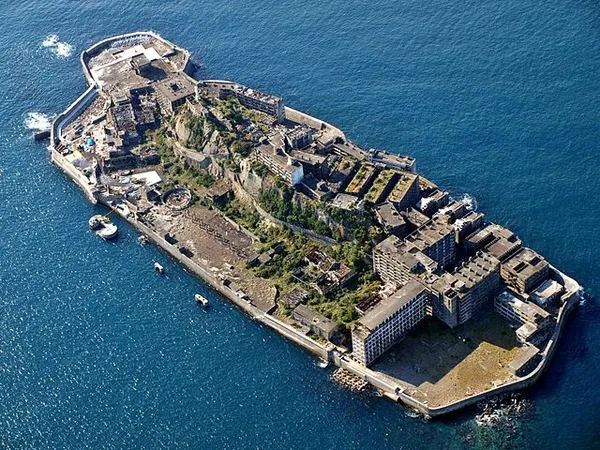
This is also the issue of forced to work (requisition recognized under international law) or forced labor (forced labor not recognized under international law), which was disputed when Gunkanjima was applied for as a World Heritage Site. It goes without saying that the National General Mobilization Order applies equally to all citizens and is a legal form of forced to work under international law.The use of forced to work in the registration of Gunkanjima as a UNESCO World Heritage Site also allowed the South Korean side to has also agreed.
There are no examples of acts recognized as illegal under international law
No international military tribunal has ever been held on the Korean peninsula since the end of the war, and there has never been a single case of a war criminal on the Korean peninsula, and no one has been tried as a war criminal . There is no fact that the annexation of Japan and South Korea is illegal, nor is there a single fact that the forced recruitment related to recruitment has been recognized as illegal under international law.
Read it together
Korea is opposed to Sado Kanayama's application for registration as a World Heritage site.Japan have evidence that it was not forced labor.
The Cabinet's decision in April 2021 and the inclusion of warship islands as UNESCO World Heritage sites are posted on the grounds that the recruitment at that time was not a forced labor.Forced Labour Convention in 1930.
When registering as a warship island, South Korea strongly opposes it, and Japan has even proposed a draft of the plan, saying that it will support it if it writes forcedlabor.Japan refused, and at the Japan-South Korea Foreign Ministers' Meeting, South Korea finally agreed to write forcedtowork.The Korean side was particular about the description because it knew that forced labor would be described as forced labor in the Forced Labor Convention at that time.Recruitment is not included in forced labor.It is stated in Article 2-2.The recruitment of the General Mobilization Order falls under paragraph (b).
South Korea opposes Japan's move to apply for the registration of Sado Kanayama as a World Heritage Site, saying it will not allow forced labor to be designated as a World Heritage Site.This is just the same view as it was on Gunkanjima.
C029 - Forced Labour Convention, 1930 (No. 29)
ARTICLE 1
1. Each Member of the International Labour Organisation which ratifies this Convention undertakes to suppress the use of forced or compulsory labour in all its forms within the shortest possible period.
ARTICLE 2
1. For the purposes of this Convention the term forced or compulsory labour shall mean all work or service which is exacted from any person under the menace of any penalty and for which the said person has not offered himself voluntarily.
2. Nevertheless, for the purposes of this Convention, the term forced or compulsory labour shall not include--
(a) any work or service exacted in virtue of compulsory military service laws for work of a purely military character;
(b) any work or service which forms part of the normal civic obligations of the citizens of a fully self-governing country;
(c) any work or service exacted from any person as a consequence of a conviction in a court of law, provided that the said work or service is carried out under the supervision and control of a public authority and that the said person is not hired to or placed at the disposal of private individuals, companies or associations;
(d) any work or service exacted in cases of emergency, that is to say, in the event of war or of a calamity or threatened calamity, such as fire, flood, famine, earthquake, violent epidemic or epizootic diseases, invasion by animal, insect or vegetable pests, and in general any circumstance that would endanger the existence or the well-being of the whole or part of the population;
(e) minor communal services of a kind which, being performed by the members of the community in the direct interest of the said community, can therefore be considered as normal civic obligations incumbent upon the members of the community, provided that the members of the community or their direct representatives shall have the right to be consulted in regard to the need for such services.
In other words, the key point in the current issue of forced labor is that the South Korean Supreme Court ruled that it was an illegal act without any basis or reference to international law. In this sense, Yoon Deok-min uses the expression "subrogated payment," but it seems quite strange. This is because the illegality of conscription and the annexation of Japan and South Korea itself does not exist.
I'm participating in the ranking.Please click and cheer for me.
Emperor Sunzong's imperial admonitions and the truth about the annexation of Japan and Korea.A life spent playing billiards as a hobby and listening to the gramophone at night.
In 1909, the movement for the annexation of Korea and Japan became stronger, and Prime Minister Lee Wan-yong, with the support of pro-Japanese groups such as Iljin-kai, proceeded to discuss the annexation of Korea with the Japanese government. On August 22nd, the Japan-Korea Annexation Treaty was signed.
On August 29th, the treaty came into effect with the approval of the emperors of both countries, and the Korean Empire collapsed and came under the control of the Japanese Governor-General of Korea. The following is an imperial admonition issued by Emperor Sunjong, the last emperor of the Joseon Dynasty, to the Korean Peninsula, and was also published in newspapers.
Imperial admonition of Emperor Sunjong of the Korean EmpireI have done a tremendous amount of work and have striven for the Restoration ordinance from my accession to the present day. The road ahead is still steep, the country is weakened, and exhaustion is everywhere, leaving us at a loss. This situation cannot be brought to an end. Rather, we should entrust them with great responsibilities and obtain perfect methods and innovative achievements. For this reason, I have personally decided to transfer the right to govern Korea to His Majesty the Emperor of Japan, a neighboring country, to solidify peace in the East and ensure the life and safety of the Korean people. The people should deeply understand the state of the country and the times, work without confusion, submit to the new civilized government of the Japanese Empire, and enjoy its happiness. I have never forgotten the people. It was born out of the true intention of saving and making use of the people, so please understand this well.August 29, 1910
After the annexation, Sunjong (Lee Ben) lived in Changdeokgung Palace in Gyeongseong-fu, was established as a king, and was called ``King Yi.'' Before the annexation, he was so weak both mentally and physically that he was unable to walk without the support of his attendants, but by this time he was able to walk and began to respond cheerfully. Masatake Terauchi said that this may be because he was ``freed from the pain of national troubles.''
After his abdication, Sumjong lived a graceful life
``Li Wang'' was very nervous, and he checked his own clock to wake up, take a bath, and go to bed on time. He played his hobby of billiards from 2pm to 4pm on weekdays and listened to the gramophone at night.
Also, like his father Gojong, who became King Yi Tae, he had an excellent memory, and it is said that he never forgot the names of the people he had an audience with. He loved the French cuisine of Kaneyoshi Yoshikawa, the first head chef of the Imperial Hotel, and ate it almost every day.
In June 1917, he visited Japan and had an audience with Emperor Taisho, who had visited Korea 10 years earlier. In November, a fire destroyed most of Changdeokgung Palace, and they moved to the remaining building called Rakuseonjae, but it was too small.
Lee Wan-yong considered moving to Deoksugung Palace, where King Lee lived, but when Lee heard this, Lee reprimanded him and said, ``Don't move, it's Changdeok Palace given to you by His Majesty the Emperor.'' After that, he lived in Nakseongjae for two years until the restoration of Changdeokgung Palace was completed.
It is believed that Shirosuke Gondo, the administrative official of the King of Yi, believed that the rituals of the King of Lee would be preserved by the title of ``Changdeokgung''.
Korea claims that they were forced to annex Japan and Korea, but no matter how you look at Sunjong's imperial admonitions and his subsequent life and behavior, it doesn't seem that way.
The mystery of Hirobumi Ito's assassination - Who was behind Ahn Jung-geun? A Browning rifle bullet that was never found. I've heard that Ito Hirobumi's assassination accelerated the annexation of Japan and South Korea, but this is clearly not the case.The reason is that in 1901, Ito resigned as prime minister in charge of the southward movement of Russian interests.A cabinet decision on the annexation was made in June before the assassination.As a result, Ito retired as governor-general in July.Ito's assassination was on Oct. 26, 1909.
Ahn Jung-geun's brown gun bullet has not been found in Ito's body.Thirteen bullets were fired in the incident.The bullet victims are as follows.
Hirobumi Ito 3 shots, Yoshifumi Muroda 5 shots, Yoshikoto Nakamura 2 shots, Jiro Mori Taijirou 1 shot, Toshihiko Kawakami, and Seiojiro Tanaka 1 shot.
The Browning Gun is a seven-shot gun.Two French cavalry guns were found in Ito's body.Ahn Jung-geun sniped from the roof of Halpin Station and the second floor to supplement Ito's strategy when he failed to hit Ito.The trajectory of the autopsy also shows that it passes from the right shoulder to the umbilical cord.If Ahn Jung-geun did not commit the crime impulsively, it would mean who was the mastermind.
For the first reason, the theory of political strife within Japan is unlikely.This is because political settlements and procedures have already been completed in Japan.
The Russian theory is hard to believe from Russia's point of view.Ito's purpose is said to have been to conclude a trade agreement to help Russia regain its rights.I went to Halpin to see Kokothev, and Kokothev welcomed me very much.If the purpose of the war was to start between Japan and Russia, it would be wrong to assassinate Ito, who had no political power.And it is unthinkable to start another war just four years after the Russo-Japanese War ended.
There is a Lenin theory.The argument is as follows.Lenin was collecting Romanov's scandal.Russia's defeat in the Russo-Japanese War was a great opportunity for Lenin.Romanov's blunder resulted in a large number of leaflets being distributed in Russia.The assassination of the Austrian Archduke was accompanied by a bronze gun.The Browning Gun is a gun used by the Russian Army.And Lenin was raking up the Browning Gun.
Commutern's strategy is to incite society without fighting itself.It also includes war between other countries.
The Russo-Japanese War ended in 1905, Ito's assassination in 1909, Sarajevo in 1914, and the Russian Revolution in 1917.The revolution was completed during World War I.
The mastermind of Ito Hirobumi's assassination is a mystery.On the other hand, Ahn Jung-geun and Browning Guns were the only ones left.Ahn Jung-geun does not know Ito's face, so the assassination is likely to end in failure.Besides Ito, there were several other Japanese who accompanied him, as well as Russians.Snipers armed with cavalry guns were preparing to fire as planned.
Was there any need for Ahn Jung-geun to go right in front of Ito?What we can think of is getting Ahn Jung-geun's attention and sniping him from afar.Otherwise, Ahn Jung-geun and Brown Guns will be left at the scene.Ahn Jung-geun must have been utilised.
Syngman Rhee disliked Japan and rewrote history; repeated purges to make the current government a "better government".
After the war, the thing that the South Korean government hated most was the phrase, ``The Japanese era was better.'' In fact, the February 28 Incident occurred in Taiwan, causing pro-Japanese groups to riot, and former President Syngman Rhee must have been alarmed after hearing about the incident. 2.28 Incident occurred in 1947, and the Republic of Korea was founded in 1948. Martial law was imposed in Taiwan for 38 years.
Immediately after the founding of the country, pro-Japanese groups were expelled. Just because they were nostalgic for the Japanese rule, they were treated as political prisoners, like communists, and were arrested and imprisoned. In just two years since the founding of the country, the number of arrests has exceeded the number of people arrested during the 35 years of Japanese rule.
Syngman Rhee, the first president of the Republic of Korea, did not actually know anything about Japanese rule, as he spent most of the time abroad. However, he hated Japan. During the time when Syngman Rhee was in exile in the United States, Joseon was even advertised as an ``ideal oriental nation'' before Japanese rule.
Although Japanese rule had ended in Taiwan, the Kuomintang army led by Chiang Kai-shek arrived there, and their politics were terrible. Even though Japanese rule has ended in South Korea, there is no guarantee that the country will be able to be run successfully.
Since the people who were involved in the management of the country during the Japanese colonial era were expelled one after another as remnants of the Japanese Empire, a group of amateurs with no political experience were left in charge of political administration. In addition, many purges and massacres of communists have been carried out due to concerns that they may collude with North Korea and aim to overthrow the country.
For the Republic of Korea, which was established as a military regime, those who could pose a threat to the management of the country were those who were pro-Japanese and communists. While they were hysterically eliminated, anti-Japanese language was also used to deflect criticism of the government's mismanagement, such as the Bodo League Incident, the Jeju April 3rd Incident, and the National Defense Force Incident. /red#.
Bodo League Incident A massacre that took place at a facility that re-educated communists and their families.
Jeju Island April 3 Incident A massacre was carried out in response to a riot that occurred on Jeju Island in South Korea, which is under the control of the United States Army Headquarters Military Government Agency.
National Defense Force Incident In January 1951, during the Korean War, executives of South Korea's National Defense Force Headquarters stole military supplies, food, and rice supplied to the National Defense Force. Embezzled. It is said that over 90,000 Korean soldiers starved to death due to embezzlement.
Past history has also been rewritten. Since Syngman Rhee himself had no knowledge of the Japanese colonial period, it could be said that it was easy for him to rewrite history.
The historical view that the Korean peninsula was exploited and enslaved during the Japanese colonial period creates an imaginary "better government" in which even if domestic politics does not go well after the founding of Korea, it will be much better than the Japanese colonial period. I created it .
In order to make that view of history into social norms, even affirming Japanese rule would become a political prisoner. The most problematic thing is that such conventional wisdom and education are still being inherited today.
Japan contributes to other countries' World Heritage Sites.Seokguram, which Korea claims Japan destroyed, is registered as a World Heritage Site.
Regarding the Moai statue on Easter Island, there is also a Moai statue in Miyazaki Prefecture, Japan.It looks like Japan built a replica of the Moai statue on its own, but it was a Japanese company that restored the Moai statue on Easter Island.The restoration listed Rapanyi National Park on Easter Island as a World Heritage Site.In return, Japan was allowed the reproduction of the Moai statue.
There is a bridge in Da Nang, Vietnam.In 1593, Japanese who lived in a Japanese town built a bridge.It is popular among Vietnamese as Nihonbashi.Young Vietnamese couples take wedding photos in front of the bridge.Hoi An, where this bridge is located, has been listed as a World Heritage Site.
There is Seokguram in Korea.It was discovered by a postman in 1909 during delivery.Since 1915, the Japanese have been repairing buildings that are about to collapse.After the end of Japanese rule, Korea restored it again in 1961, but Korea rearranged them into its own arrangement and they said the reason was Japan arranged Buddha statues in a random way.Afterwards, the photos and detailed layout of Seokguram were found and it became clear that japanese arrangement was correct. But Korea said, "Seokguram was perfectly preserved for more than 1,000 years, but Japan was jealous and damaged it with cement and concrete."Seokguram was listed as a World Heritage Site in 1995.
Seokguram was just an abandoned ruin until Japan restored it.
Who is Syngman Rhee? - The first anti - Japanese president who knows nothing about the Japanese colonial period - No connection to the March 1 independence movement
Is Syngman Rhee a former pro-Japanese reformist?
Where did independence gate come from?
Syngman Rhee does not know about the Japanese colonial era
Anti-Japanese government established as a US puppet government
There are many strange things about Syngman Rhee from Japan. Upon investigation, it appears that he was also a founding member of Seo Jae-bi's Independent Association. Speaking of Seo Jae-bi, he was a central figure in establishing the Seoul Independence Gate after the Sino-Japanese War, and was a pro-Japanese faction who started the Gakshin Coup with Kim Ok-gyun. Kim Ok-gyun defected to Japan and became friends with Yukichi Fukuzawa and others, and was assassinated in Shanghai by an assassin sent by Queen Min.
So when did independence gate change to independence gate from Japan? Independence Gate was established by Seo Jae-bi and the Independence Association to celebrate the independence of the Korean peninsula after the Sino-Japanese War, but Koreans still firmly believe that it is an independent gate from Japan.
In 1897, he was imprisoned for distributing leaflets demanding Gojong's abdication, and after being released from prison in 1904, he lived in the United States until 1919, and was not involved in the March First Independence Movement. Although he established a provisional government in Shanghai in response to the momentum of the March 1st independence movement, he was ousted due to factional conflict and moved to Hawaii after just one year. In other words, he was not on the Korean peninsula from 1904 until the end of the war in 1945. He lives in America, which means he has never experienced Japanese rule.
Syngman Rhee's postwar administration of the Korean peninsula can be considered to have been truly administered from an American perspective. It is completely blank on topics such as the annexation of Japan and Korea and the modernization of the Korean peninsula. He may have even been observing the Russo-Japanese War from an American perspective. His policies were linked to those of GHQ, and must have been completely linked to anti-Japanese sentiment in the United States. In any case, there is no doubt that the foundations of the anti-Japanese structure were built during the Syngman Rhee era and continue to exist today.




 Korea is opposed to Sado Kanayama's application for registration as a World Heritage site.Japan have evidence that it was not forced labor.
The Cabinet's decision in April 2021 and the inclusion of warship islands as UNESCO World Heritage sites are posted on the grounds that the recruitment at that time was not a forced labor.Forced Labour Convention in 1930.
When registering as a warship island, South Korea strongly opposes it, and Japan has even proposed a draft of the plan, saying that it will support it if it writes forcedlabor.Japan refused, and at the Japan-South Korea Foreign Ministers' Meeting, South Korea finally agreed to write forcedtowork.The Korean side was particular about the description because it knew that forced labor would be described as forced labor in the Forced Labor Convention at that time.Recruitment is not included in forced labor.It is stated in Article 2-2.The recruitment of the General Mobilization Order falls under paragraph (b).
South Korea opposes Japan's move to apply for the registration of Sado Kanayama as a World Heritage Site, saying it will not allow forced labor to be designated as a World Heritage Site.This is just the same view as it was on Gunkanjima.
C029 - Forced Labour Convention, 1930 (No. 29)
ARTICLE 1
1. Each Member of the International Labour Organisation which ratifies this Convention undertakes to suppress the use of forced or compulsory labour in all its forms within the shortest possible period.
ARTICLE 2
1. For the purposes of this Convention the term forced or compulsory labour shall mean all work or service which is exacted from any person under the menace of any penalty and for which the said person has not offered himself voluntarily.
2. Nevertheless, for the purposes of this Convention, the term forced or compulsory labour shall not include--
(a) any work or service exacted in virtue of compulsory military service laws for work of a purely military character;
(b) any work or service which forms part of the normal civic obligations of the citizens of a fully self-governing country;
(c) any work or service exacted from any person as a consequence of a conviction in a court of law, provided that the said work or service is carried out under the supervision and control of a public authority and that the said person is not hired to or placed at the disposal of private individuals, companies or associations;
(d) any work or service exacted in cases of emergency, that is to say, in the event of war or of a calamity or threatened calamity, such as fire, flood, famine, earthquake, violent epidemic or epizootic diseases, invasion by animal, insect or vegetable pests, and in general any circumstance that would endanger the existence or the well-being of the whole or part of the population;
(e) minor communal services of a kind which, being performed by the members of the community in the direct interest of the said community, can therefore be considered as normal civic obligations incumbent upon the members of the community, provided that the members of the community or their direct representatives shall have the right to be consulted in regard to the need for such services.
Korea is opposed to Sado Kanayama's application for registration as a World Heritage site.Japan have evidence that it was not forced labor.
The Cabinet's decision in April 2021 and the inclusion of warship islands as UNESCO World Heritage sites are posted on the grounds that the recruitment at that time was not a forced labor.Forced Labour Convention in 1930.
When registering as a warship island, South Korea strongly opposes it, and Japan has even proposed a draft of the plan, saying that it will support it if it writes forcedlabor.Japan refused, and at the Japan-South Korea Foreign Ministers' Meeting, South Korea finally agreed to write forcedtowork.The Korean side was particular about the description because it knew that forced labor would be described as forced labor in the Forced Labor Convention at that time.Recruitment is not included in forced labor.It is stated in Article 2-2.The recruitment of the General Mobilization Order falls under paragraph (b).
South Korea opposes Japan's move to apply for the registration of Sado Kanayama as a World Heritage Site, saying it will not allow forced labor to be designated as a World Heritage Site.This is just the same view as it was on Gunkanjima.
C029 - Forced Labour Convention, 1930 (No. 29)
ARTICLE 1
1. Each Member of the International Labour Organisation which ratifies this Convention undertakes to suppress the use of forced or compulsory labour in all its forms within the shortest possible period.
ARTICLE 2
1. For the purposes of this Convention the term forced or compulsory labour shall mean all work or service which is exacted from any person under the menace of any penalty and for which the said person has not offered himself voluntarily.
2. Nevertheless, for the purposes of this Convention, the term forced or compulsory labour shall not include--
(a) any work or service exacted in virtue of compulsory military service laws for work of a purely military character;
(b) any work or service which forms part of the normal civic obligations of the citizens of a fully self-governing country;
(c) any work or service exacted from any person as a consequence of a conviction in a court of law, provided that the said work or service is carried out under the supervision and control of a public authority and that the said person is not hired to or placed at the disposal of private individuals, companies or associations;
(d) any work or service exacted in cases of emergency, that is to say, in the event of war or of a calamity or threatened calamity, such as fire, flood, famine, earthquake, violent epidemic or epizootic diseases, invasion by animal, insect or vegetable pests, and in general any circumstance that would endanger the existence or the well-being of the whole or part of the population;
(e) minor communal services of a kind which, being performed by the members of the community in the direct interest of the said community, can therefore be considered as normal civic obligations incumbent upon the members of the community, provided that the members of the community or their direct representatives shall have the right to be consulted in regard to the need for such services.