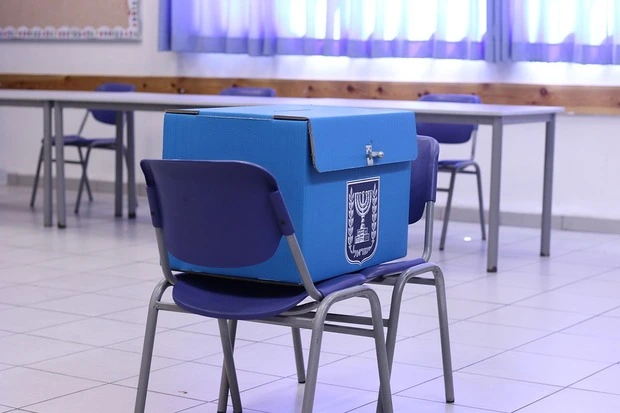
Election officials collect voting papers in South Korea's presidential election?an abnormal situation in which one cannot enter a ballot box directly.
2022-03-08
Category:South Korea I'm participating in the ranking.Please click and cheer for me.
Election workers collect voting papers
< Article Excerpt //--> Electors were unable to properly manage voting papers during the pre-voting process for those who were confirmed and quarantined on May 5, causing confusion.Some voters protested, saying, "It violates the principle of direct and secret voting," as election workers collected voting papers instead of putting them directly in the ballot box.Some polling stations put voting papers in baskets and transported them, saying, "We don't do this in the election for school president and mayor."The ruling and opposition parties visited the National Election Commission in protest.The National Election Commission said, "It was insufficient for voting management, but there was absolutely no illegal possession," and decided to hold an emergency meeting on July 7 to prepare measures to vote in Japan.<-- Article Excerpt //>
No countermeasures have been taken from the 2020 election
This is a surprising incident, but is it possible in Korea?It is surprising that election officials collect voting papers.In the 2020 general elections in Korea, the ballot box itself was suspected to be replaced and there was a big problem with illegal elections, and this is like this in the presidential election.Moon Jae In said yesterday, "It is regrettable mistake, and the NEC should explain the situation," while Lee Jae-myung said, "We should take thorough measures to prevent confusion in the main vote on June 9."In the first place, it can be said that no countermeasures have been taken even though there was such a disturbance in the 2020 general election.The president's Moon Jae In and the ruling Democratic Party should had taken the measures together.
China's intervention in the 2020 general election was also feared
In the 2020 election, there was a lot of controversy over the illegal election.Korea uses an electronic ballot counting system and its communication equipment is made by Huawei.It is unclear why China is introducing Chinese products into the voting system because it is not a democracy, but some point out that the results of the vote counting may have been falsified due to illegal access from China.A professor at the University of Michigan said, "The ruling party's landslide victory in the general election is statistically abnormal, and there are many illegal votes that is enough to change the president-elect, and he published a paper about that.
POINT Korea makes fun of Japan as a democratic backward country, but in Japan, election clerks cannot collect voting papers.That is, it has been taken care of in Japan.
I'm participating in the ranking.Please click and cheer for me.
South Korea's Next Presidential Candidate "I Love the Japanese People" and Continuous Anti - Japanese Remarks.
Lee Jae-myung, a candidate running for South Korea's next presidential election, said on November 25th, ``I love the Japanese people and respect their civility,'' and added, ``Japan invaded South Korea and attacked dozens of people. "He has a history of dominating and expropriating Korea for many years." "He is still dreaming of becoming a military power and is provoking that Dokdo, which South Korea effectively controls, is his own territory. He is also clear about historical issues. It doesn't seem like he is sincerely remorseful, so of course I'm worried."
Lee Jae-myung, an anti-Japanese force who said he loves the Japanese people. What followed was a series of incoherent statements.
First of all, he does not seem to understand the root of the current problems in Japan-Korea relations. This is not a historical issue from the beginning. The problem is that South Korea was taking advantage of its position as a friendly country and taking advantage of its position as a white country to divert strategic materials imported from Japan that require strict control to third countries. .
Then there is the issue of the state of the abrogation of the claims agreement, which is the basis of Japan-South Korea diplomatic relations, by reviving individual claims and issuing compensation orders to the Japanese government and Japanese companies in domestic courts. Without understanding that this is not a problem of the past but an ongoing one, saying that we love the Japanese people will not improve Japan-Korea relations.
The five years of Moon Jae-in created an irreparable rift in Japan-Korea relations. Do they think that if the anti-Japanese mood as a national sentiment subsides, things will be manageable on the surface? Japan has given up on relations with South Korea due to anti-Japanese activities since Moon Jae-in took office, and has continued to build relations with other neighboring countries.
Commitments and work with his new partner are occurring one after another. If you don't fully understand these things, you'll just think it's a childish and shallow idea.
Japan has been putting up with South Korea for many years, but since it was excluded from the white list, it has created partners other than South Korea. Will South Korea ever return to being our most important neighbor?
Moon Jae In wants pictures. Looking at the four years of Moon Jae In, it seems that they think that meeting heads of state and chatting with each other will make the world peaceful.Although the North-U.S. dialogue broke down due to Moon Jae In talked lies, Moon Jae In was just wanted to be photographed on camera, and after joint liaison office between the two Koreas was bombed.In ASEAN suddenly approached former Prime Minister Abe and took a picture they were sitting with Moon Jea In for a few miutes."At the Tokyo Olympics, Japan, South Korea, China and North Korea proposed a four-way summit, but the contents are unclear.When we meet, the world will be at peace.Now it is invalid because North Korea is not participating, but I don't understand why he want to meet the prime ministers.He still seems to think that he can achieve it just leaders meet.
Meeting with South Korean parliamentarians and Foreign Minister Hayashi. Is it meaningful to deal with mere performance diplomacy? An unprecedented response between members of the Diet and government ministers
Foreign Minister Hayashi met at the Ministry of Foreign Affairs on the morning of the 25th with the "policy consultation delegation" sent by South Korean President-elect Yoon Seok-you to Japan. There have been criticisms within the Liberal Democratic Party of having a meeting between a mere parliamentary group that has not yet been established as a government and Japanese government ministers. Since it is unknown whether they are really delegations, will the Foreign Minister visit all of them when a foreign member visits Japan? And since I had an interview with the members of the Diet, there is no reason why Yoon Seok-you would not have an interview after taking office as president.
Interview in a state of violation of international law
Currently, the Japanese government is in a position not to negotiate unless the Korean government corrects the state of violation of international law, and the state of violation of international law has not changed yet. After that, They had a meeting with former Minister of Finance Fukushiro Nukaga of the Liberal Democratic Party and former Minister of Education, Culture, Sports, Science and Technology Nakagawa of the Constitutional Democratic Party, who are the chairman of the Japan-Korea Parliamentary Union, at a hotel in Tokyo for about an hour and a half. One of the points that should be evaluated is that the Korean parliamentarians should return to the Japan-Korea relations at the time of the 1998 Japan-Korea Joint Declaration. In 1998, it became a joint declaration that embodied the ideal way of exchange between Japan and South Korea from the 1965 Japan-Korea Basic Treaty, such as the opening of Japanese culture in South Korea and the resolution of the problem of fishing rights in Takeshima. Even if it is simply said to improve Japan-South Korea relations, it is commendable that they have discussed them many times and have shown specific target points because the Korean side has destroyed everything for their own convenience. However, even if it returned to the time of the Japan-Korea Joint Declaration, this declaration was virtually invalidated by the National Assembly of South Korea in less than two years. How can we prevent it from being invalidated again even if it returns in 1998? That point is missing.
Do you make another promise with a country that does not keep your promise?
I think that the problem that South Korea does not keep its promise is that the country itself does not have a structure to keep its promise. Even if the president of that era considers the times and makes a promise with Japan through diplomatic immunity, Korean parliamentarians who have an anti-Japanese structure and an anti-Japanese constitution will invalidate them with the power of the legislature. Is the Kishida administration rushing for easy diplomatic achievements as it has no diplomatic achievements so far? Foreign Minister Hayashi is in a good mood playing the piano in the United Kingdom. Will he repeat the Japan-Korea relations that he has repeated over and over again?
The preamble of the Constitution lies at the root of South Korea's anti - Japanese sentiment.The reason for affirming anti - Japanese sentiment and excluding pro - Japanese sentiments is found in the
The preamble of the Korean Constitution states that 3.1 the legal system of the provisional government of the Republic of Korea will be inherited. Then, what is the March 1 Provisional Government of the Republic of Korea? It is an organization that called itself the Provisional Government and was established in 1919 as an anti-Japanese force. Looking at the contents of the charter, we see that the oath is strongly anti-Japanese: ``We will fight to the last man to indoctrinate Japan from barbarism.''
The preamble of the constitution describes the principles that govern the entire constitution. The structure of this idea is to inherit the legal structure of the March 1 Charter of the Provisional Government of the Republic of Korea. If we interpret these without contradiction, Article 21 of the latter part of the Korean Constitution states freedom of speech and Article 22 states academic freedom, but if we read it based on the preamble of the Constitution, we can see that 3.1 Legal framework of the provisional government It can also be interpreted as allowing freedom of speech and academics on the premise of inheriting the law. This is actually the case in Korea today.
If you look at the oath of the provisional government quoted in the preamble of the constitution, it clearly states anti-Japanese ideology. In the first place, the constitution should not quote anything or include language that assumes other countries.
In any case, as long as South Korea is under this constitution, anti-Japanese activities are always legitimate, and on the contrary, pro-Japanese activities are criticized as acts that destroy the legal system of the March 1 Provisional Government Charter and the Constitution. If members of the Diet follow the principle of adhering to the Constitution, then anti-Japanese members are conducting legitimate parliamentary activities. This is the main reason why it is said that #anti-Japan is South Korea's national policy.
How can the preamble of the Constitution be consistent with fundamental human rights such as freedom of speech, thought and belief, and academic freedom? There appears to be no case where a legal interpretation has been obtained in the Constitutional Court through a lawsuit or controversy that has raised this point. The Korean government is free to expand its interpretation as much as it wants. This is the case now, as seen in the No Japan movement, where anti-Japanese activities are legitimate activities, and pro-Japanese speech is denounced as ``traitors.'' Is this an exception to basic human rights, with speech affirming the era of Japanese rule being suppressed, or is anti-Japanese a duty of every Korean citizen as written in the Provisional Government's oath?
Provisional Government OathOathTo my 2,000,000 fellow citizens whom I respect and loveMarch 1st year of the Republic of Korea One day, since the Korean nation declared its independence, men and women, young and old, all classes, and all sects, of course, have come together to fight under the inhumane violence of Japan, the Germany of the East. The sympathy of the world is now suddenly focused on our people because they have expressed the character of a nation that is extremely patient with fairness, longs for independence and freedom for its people, and loves truth, justice, and humanity. It was at this time that the government was organized with the mandate of all the people of the country. I hereby swear that this government, together with all the people of this country, will work wholeheartedly to fulfill the great mission of restoring the nation and establishing its identity as a nation, observing the provisions of the provisional constitution and the principles of international society. My fellow countrymen, be inspired. Every drop of blood we shed is the gift of freedom and fortune to our descendants. It is the precious foundation for building God's kingdom. The way of our people will surely edify Japan's wild horses. Our justice truly trumps Japan's violence. My brethren, rise and battleto the last man.
3.1 The provisional government was the result of an anti-Japanese movement that occurred on March 1, 1919 under Japanese rule, and after that, Syngman Rhee established a provisional government in Shanghai, where he was in exile. This provisional government is considered the legitimate root of the Korean government, and Syngman Rhee became the first president of Korea after Japan's defeat. In other words, the Korean government itself is based on anti-Japanese organizations. Therefore, the Constitution will inherit the legal system of the Provisional Government Charter.
It is no wonder why this story has not been reported in Japan, but it seems safe to assume that there are almost no members of the Korean Diet who are not anti-Japanese. On the contrary, he says that it is impossible to become a member of the Diet while advocating pro-Japan policy. Rather than saying, ``Many South Korean parliamentarians are anti-Japanese,'' it seems more accurate to say, ``South Korean parliamentarians exist because they are anti-Japanese.'' South Korea will never become a pro-Japanese country. That future will never come. Will the South Korean government or National Assembly propose a constitutional amendment and delete the text written in the preamble? If that happens, the roots and identity of the Korean government will disappear.
Anti-Japanese activities are legitimate activities that are affirmed by the Korean Constitution. Depending on the interpretation, it can also be considered to be outside the scope of freedom of speech. We need to think about South Korea with this in mind.
Moon Jae - in's words regarding Park Geun - hye's pardon are abstract; who is the one who created the division?
[Excerpt from Chosun Ilbo article (translation)]
On the 24th, former President Park Geun-hye expressed her gratitude to President Moon Jae-in for granting him a special pardon.
Lawyer Yoo Yong-ha, a close aide to former President Park, met with reporters in front of Samsung Seoul Hospital in Gangnam-gu, Seoul, where former President Park was hospitalized, and relayed former President Park's words on his behalf.
Regarding former President Park's health condition, attorney Yoo said, ``It looks like she will be receiving treatment at a hospital for the time being,'' but added, ``I cannot comment on the specific health condition right now.''
Regarding former President Park's future plans, lawyer Yoo said, ``Right now, he is concentrating on treating a new disease.He told me that he would not meet with anyone.''
On this day, to celebrate the new year of 2022, the government granted a special pardon to former President Park, who is currently in prison after being found guilty in the National Agricultural Organization Incident.
``We must overcome the pain of last year and move on to a new era,'' President Moon said, ``I hope that this will be the beginning of a new era of unity and harmony that transcends differences and pros and cons.'' .
President Moon said, ``Rather than being buried in the past and fighting each other, it is time for us to boldly work together toward the future.''Especially given the many challenges facing us, we must strive for national unity and humility.'' There is an urgent need for inclusiveness."
[Excerpt above]
Moon Jae-in's words have an abstract meaning: the people will come together as one and create a new era.
It is said that Moon Jae-in himself was the one who created the cause of the nation's division in the first place. The main argument of the opposition parties is that Moon Jae-in became president after taking advantage of Park Geun-hye's impeachment, and that the current left-wing government is the one that carried out various schemes surrounding the impeachment.
There are many people who feel that it is strange that this pardon was decided for the exact same reason as the previous pardon was not granted.
In South Korea, the president is arrested every time there is a change of government. Perhaps because of the culture of grudges, there is a history of retaliation for retaliation.
Many people take this to mean that Moon Jae-in is asking for a pardon and the charges against him to be reduced.
Moon Jae-in's term remains until next year's presidential election. Many people seem to feel uncomfortable about being pardoned at this timing.