Korea has the largest ODA per population.China Appreciates Japan's Economic Aid
2022-01-18
Category:China I'm participating in the ranking.Please click and cheer for me.
China appreciates Japan's ODA
According to Japan's Ministry of Foreign Affairs, ODA to China totaled about 3.9 trillion yen from 1979 to 2016.More than 60% of China's foreign aid is from Japan .Shanghai Pudong International Airport, Beijing Capital International Airport, Lanzhou, Wuhan, and Xi'an airports were also built with Japanese aid.In addition, 5,200 kilometers of railways, Beijing sewage treatment plants, Sino-Japanese Friendship Hospital, Beijing Subway, Chongqing Railway, and major ports have been built and expanded.
Since the 2000s, JICA has been training more than 15,000 managers and HIDA has been training more than 22,000.Former General Secretary Deng Xiaoping and former General Secretary Hu Jintao officially thanked each other.Recently, Deputy Spokesman Hua Chunying thanked Japan, saying, "Japan's ODA has contributed greatly to China's reform and opening-up and economic development, " adding, "We will discuss new cooperative relations with Japan."
MEMO Although there are territorial issues in Sino-Japanese relations, the Chinese government officially acknowledges that Japan has contributed greatly to China's development.
South Korea says it doesn't remember Japan's ODA
The amount of ODA to South Korea is 650.2 billion yen, but the total value of $500 million, including free financial cooperation and private cooperation, is said to be 2-3 trillion yen.Compared to China, South Korea has the most aid in terms of ODA costs per population.
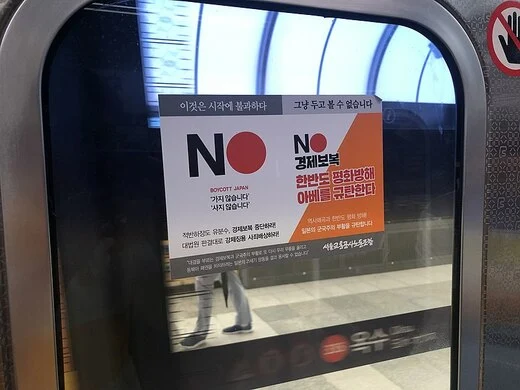
Japan apologized to South Korea several times during the annexation of South Korea and Japan, but South Korea did not remember.I don't think Japan remembers being thanked by South Korea, but this is more true.On the contrary, after the end of ODA program for South Korea in 1990, the problem of recruiting workers and Japanese Military comfort woman grew.Is it just my imagination that they seem to have started after end of ODA.
POINT Since the end of ODA to South Korea, the anti-Japanese movement in South Korea has become popular.Is this a coincidence?
I'm participating in the ranking.Please click and cheer for me.
falsification of China's GDP This was revealed after the collapse of the Soviet Union, but only half of its GDP was exist.In the 56 years from 1929 to 1985, national income was 90 times (actually 6.5 times).The average growth rate was 8.3 percent, but actually 3.3 percent.Even U.S. Nobel laureate Paul Samuern believes in Soviet statistics and said the Soviet Union is growing.To that extent, the method of falsifying statistics was meticulous.
The People's Republic of China, founded in 1949, has carried out reforms, but it was the Soviet Embassy that served as the headquarters.Also after Mao Zedong's Cultural Revolution and Deng Xiaoping's reform and opening-up, statistical methods continued.China is not capitalism.When foreign companies establish their own companies in China, they cannot take out the capital they have invested in because it is a joint venture.GDP tampering is effective in attracting foreign investment and does not need to be returned.
China puts aside domestic environmental issues and bans imports from Fukushima.
I was wondering why the average life expectancy of the Chinese people is so short.China is the birthplace of traditional Chinese medicine and is a country that practices the same principle of medicine and food, but why is there a difference of nearly 7 to 8 years with Japan? There used to be a difference of about 10 years. I thought it was because Chinese cuisine basically uses a lot of oil, but that alone doesn't explain it.
There was a story that when an air dosimeter was used to measure air dosimetry in an apartment in Shanghai, it was 976 times as high as in Tokyo.However, since radioactivity from land comes from mineral resources, it is important to note that radioactivity from land is emitted from mineral resources, so it is important to note that radioactivity from land is emitted from mineral resources. The higher the radiation dose, the higher the radiation dose. Plutonium is extracted from uranium ore, and there are many other ores that contain high amounts of radioactive materials in nature.
It has long been known that rare metals made in China are traded internationally at low prices because China does not provide the various health considerations and guarantees that each country naturally takes into account. This is natural since this is a country where there is no sense of human rights. Radioactive materials are generated from rare metals during the mining process. As a result of not paying attention to the miners, radioactive materials flow into the river.
The fine aggregate, or fine sand, used in things like concrete is finely ground by river currents. Nuclear power plants in inland China use river water for cooling water, but it is said that nuclear power plant accidents occur frequently, and since it is a country like that, even if an accident occurs, it is naturally covered up.
As a result, we do not know what is contained in the building materials of condominiums. It is understandable that radioactivity levels were detected in Shanghai crabs taken downstream of the river.
Japan should always talk from a scientific perspective, and if the Chinese had a scientific perspective, would they realize that their country is already in a dire situation? If you still don't notice 30 years from now...
Chinese Foreign Ministry "China celebrates the election of President-elect Yoon Seok-yeol as South Korea's new president," a spokesman for China's Foreign Ministry said at a regular press conference on Tuesday. "We hope to promote healthy and stable development of bilateral relations with South Korea."
Contrary to the official stance, Chinese foreign policy experts are paying keen attention to what kind of policies Yoon will take when he mentioned China's strong opposition to the deployment of additional high-altitude missile defense systems and the quad.
Mainstream Chinese media, including Xinhua News Agency and CCTV, introduced Yoon's thoughts on "developing mutually respectful Korea-China relations," but the network of patriotic Internet media said that Yoon is considered "Korea's Trump." Chinese media "Peng Peng" said that President-elect Yoon is advocating strengthening the Korea-U.S. alliance, and introduced the analysis of Professor Wang Xiaok-ku of Jilin University that "Korea-China relations will face a relatively big challenge in the future."
Cha Hull, secretary general of the Center for International Public Opinion Research at the Chinese think tank, told the Dong-A Ilbo, "If Yoon joins the Quad, the relationship between Korea and China will deteriorate further than the THAAD situation." Cha said, "Third was a missile threat to North Korea, but Quad clearly intends to target China. If it is decided to join, China will impose strong sanctions such as restricting South Korean companies' access to the Chinese market and suspending trade." He also said, "With China set to form a new leadership at the 20th party convention this fall, the check on the public will be accepted as an attempt to obstruct and destroy it."
Former Global Times editor Hu Jintao pointed out on his social media that "Korea's trade with China is larger than the combined trade with the U.S., Japan and Europe," adding, "There is a possibility that Cheong Wa Dae will take a big step to reverse Korea-China relations."
Source of quotation:
Will Ethiopia's default be the end of African investment? Debt trap derived from One Belt, One Road.
China's One Belt, One Road initiative is set to go even further down the road after Africa's Ethiopia defaulted on the 2nd, unable to pay interest on its debt due in December. The countries circled on the map in the image are the countries where China is primarily investing. Ethiopia, which defaulted this time, is marked in red. One Belt, One Road is a route south to Italy in Europe, but Italy has announced its withdrawal from One Belt, One Road. This is the departure of the western base. Where is Kitaji's base? It is now Kiiv, the capital of Ukraine, which is currently at war.
Yellow countries are those with excessive debt to China. Includes Sudan and Somalia. These are the countries along the Suez Sea, including Ethiopia, which follow the Suez Canal, and China was trying to gain control of the sea route to the Mediterranean Sea. The rationale is simple: once the One Belt, One Road project starts, we can make a lot of money, so why not borrow money and prepare?
South Africa has the highest GDP among African economies, and it can be seen that the countries on the land route to South Africa are also trying to keep it in check. Countries other than the ones circled account for 36.9% of China's investments in Africa, so it is spreading money to almost all countries. The purpose is to buy votes from the United Nations. African countries account for approximately 28.5% of the votes in the United Nations. This is what is behind China and the West, dismissing it as a minority opinion.
This is actually related to the Taiwan Strait issue. Mainly African countries support China's "one China principle." Africa does not want to get into trouble with its creditor country, China, over a faraway island with which they do not have any exchanges.
If the countries along the Suez Sea default, the Belt and Road initiative will end for Africa.
Will Xi Jinping's reform and opening-up policy continue to be revised in his third term? - There is no change in his ambition to unify Taiwan.
Xi Jinping's third term begins
Will the reform and opening-up policy continue to be revised?
Free industrial investment is essential for industrial growth
What is necessary to continue economic growth
No change in ambition to annex Taiwan
With the end of the Communist Party Congress and the start of Xi Jinping's third term, various reports have been made. Taken as a whole, it seems that the direction of revision of the reform and opening-up policy since Deng Xiaoping has been indicated. The results of Xi Jinping's economic policies are unclear in every sense, but it is clear that China's economy has grown due to the reform and opening-up path initiated by Deng Xiaoping, the partial introduction of market economic theory, and U.S.-China relations. Although Xi Jinping does not explicitly criticize these, what he is doing appears to be aiming for a return to the old style of Chinese socialism.
Although this is a country where individuals cannot own real estate, laws that allow individuals to buy and sell rented real estate are restricting growing real estate companies and forcing them into bankruptcy, and reining in the heads of growing companies like Alibaba. Does Xi Jinping think that these economic elements are a threat to China's socialist forces that were born on the path of reform and opening up? I have to say that his sense of being a threat is correct. This is because a liberal economy will destroy the socialist system.
In order for the economy to continue to grow, we must ensure as much freedom as possible. There are limits to simply investing in certain industries that the country has chosen as part of its national policy. A process in which these industrial investments are opened up to the private sector, private banks are free to make industrial investments, and private companies are free to commercialize services that have never existed before is an essential condition.
Various freedoms are essential for this, including freedom of speech, freedom of thought and belief, and academic freedom. This creates new social norms and new ways of living, which in turn leads to the creation of new products and services. Plants have a chance to flourish when they grow freely as intended.
Critics say that Xi Jinping has chosen stability over growth. What is worrisome, however, is that there has been no change to the ambition to unify Taiwan. Such restorationists are likely to advocate nationalism and wage wars of aggression. You can imagine this by looking at the current President Putin.