Professor Ramseyer's negative statement [There is no evidence of forced abduction of comfort women] is a complete lie.
2022-01-06
Category:Japanese comfort woman problem I'm participating in the ranking.Please click and cheer for me.
[Translated excerpt of Yonhap News article]
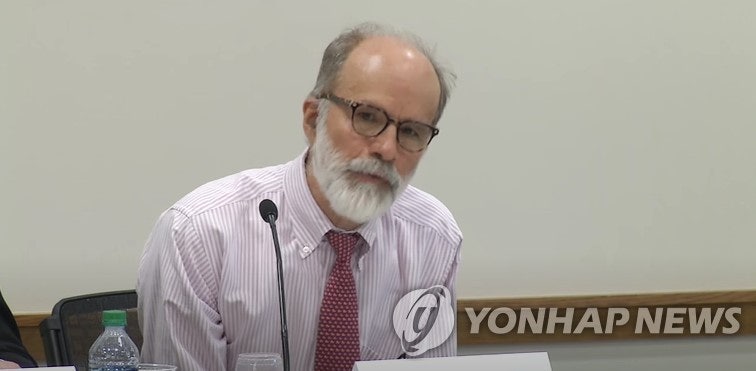
On January 5th, Mark Ramseyer, a professor at Harvard Law School in the United States, who defined South Korean comfort women as "prostitutes" and received international backlash, has now proven that "comfort women were forced to be recruited." It is expected that there will be a stir by asserting that there are no contemporary documents that do so.
Professor Ramseyer made this clear on the 5th in his article ``Sexual Contracts in the Pacific War: Responses to Criticism'' posted on the Harvard Law School website.
In this paper, which is a rebuttal of previous criticisms directed at her, Professor Ramseyer argues that ``Korean women were drawn into [comfort women] by the Japanese military who fought against their will, regardless of their will.'' I will respond to the allegation,'' and declared, ``This allegation is false.''
At the same time, he asserted, `` Korean women were not forced to serve as comfort stations due to planned coercion by the Japanese military .''
He specifically argued that the 1983 book ``My War Crimes'' by Japanese author and activist Seiji Yoshida was the de facto basis for the forced recruitment of comfort women.
For 35 years after the end of the war, there was no evidence (proving forced conscription). It was only in the late 1980s that some Korean women began to advocate this."
He added, ``The comfort women debate started with Yoshida's 'fraud'' '' and ``Most of the experts who criticized me were from Japan and South Korea, but even though they knew about this book, no one He also didn't mention this book."
Regarding the paper in question, Professor Ramseyer said, ``The core of the paper was about the contract, such as why the comfort women received advance payment and what conditions under the contract determined the women's working hours.'' ``However, none of the criticisms leveled at me were aimed at this kind of economic analysis.''
In a paper published that day, Professor Ramseyer cited a study last year by Lee Yuken, a co-author of ``Anti-Japanese Tribalism'' and a research committee member at the University of Economics Research Institute, which received support from far-right groups in Japan.
Professor Ramseyer also claimed that comfort women victims, who remained silent for a considerable period after the war, changed their words after they began demanding reparations from Japan.
In a situation where there is no document proving forced recruitment, the only evidence, the testimonies of victims, lacks credibility. .
In particular, he referred to comfort woman victim Lee Yong-soo as ``the most notorious (of all the people who changed their words)''.
[Excerpt above]
POINT Professor Ramseyer says that no evidence of her forced abduction or her contract has been found anywhere. Similarly, the Japanese government has made a cabinet decision under the Abe administration that there is no evidence of forced recruitment.
I'm participating in the ranking.Please click and cheer for me.
Modern conform women In most cases, endless wars involve economic factors.In the first place, war is triggered by the economy.Looking at the Middle East problem in this respect, the business surrounding it will expand, take root in society, and have a strong social voice in the long-standing conflict structure.They become groups that don't want to end the war.
What about the anti-Japanese movement, anti-Japanese economy in this view?If politicians, left-wing media, university professors, teachers' unions, critics, social activists, and many people earn income through anti-Japanese movement, connect with each other, and have social voice, this trend will not stop.Another reason is that human trafficking brokers are still active in Korea.In California, most foreign women working in sex-related industries are Korean, and in Australia, a large organization of Korean brokers has been caught.This is the ongoing Sexual Slavery problem.
During the Joseon Dynasty, most of the people were servants and were bought and sold by brokers.It is a huge market, and it will not disappear easily under Japanese rule.Japan abolished the status system.In other words, it must have been quite troublesome to lose the broker's servant.The Japanese police at that time must have caught Japanese Military Sexual Slavery several times for illegally mediating.
What would happen if such organizations were linked to the anti-Japanese movement and Japanese Military Sexual Slavery business?What if a large amount of foreign currency is introduced into Korea from women working abroad through brokers to build a statue of Japanese Military Sexual Slavery and if that money to use for promotion of anti-Japanese propaganda?It is also a place to hide that continues to make a fuss about Japan decades ago and incites public opinion that it is worse.
It is surprising that the modern version of the Japanese Military Sexual Slavery problem does not generate any social interest even if it continues to condemn Japan, a country that has no hope of solving the problem.Moon Jae In, who is sensitive to women's rights, does not seem to be active in this issue.
Korea's continued Jewish cosplay.All Japan - South Korea relations come to this.
Japanese Military Sexual Slavery The problem and recruitment problem are individualized, but what Korea has been talking about since the end of World War II is JewishCosplay .The Asahi flag issue is also related.South Korea tells Japan to imitate Germany because Germany compensates for the war and Japan does not.Japan invaded countries that were considered Western colonies and paid reparations to those countries.China has waived compensation.Korea was not an enemy country and there was no war damage , so the concept of compensation itself does not exist.
When it comes to Jewish cosplay, we are in the same situation as Jews.Why are Jews rescued and we have no help?Germany says it is compensating, but Germany only compensates each country comprehensive except for compensation for Jews.The logic of reparation can be seen from these things as if it had been done to Jews.The oath of the Provisional Government of the Republic of Korea clearly says, "Japan's inhumane assault " and the current preamble of the Korean Constitution says it will inherit the provisional government's legal code.So far, Nazi = Japanese equation.Therefore, it becomes the Harkencroits = Asahi flag.
What is certain to be known as a historical fact is that the Holocaust is an operation to slaughter and annihilate Jews in the vast area of Europe.Japan claims to have carried out genocide on the Korean Peninsula, but the population growth is remarkable.The U.S. says there was no Japan's war crimes under GHQ rule.MacArthur's postwar policy is to promptly convene an international military court to punish war criminals, justify the American war, and quickly bring Japan back to the international community.America was looking for war criminals.It is concluded that it was not on the Korean Peninsula.
To be clear, Japan and the Nazis, Koreans and Jews are completely different.World War II also has a completely different history.No country in the world thinks Koreans and Jews are the same.It is clear that the provisional government wants to replace Korea with Jews and pretend to be a war victim and become a victorious group.
South Korea has requested attendance at the San Francisco Peace Conference and has been rejected by the United States.At this time, I was trying to get the international community to recognize Jukdo sovereignty.
South Korea's UNIQLO turns into a large profit.Where did the boycott movement go?Have we forgotten the past?
FRF El Korea, which operates Uniqlo in South Korea, has announced its results for fiscal year 2021 (September 1, 2020 to August 31, 2021).
Operating profit was 52.9 billion won (approximately 5.1 billion yen), a significant turnaround from a deficit of 88.4 billion won in the previous fiscal year. The company aimed to improve profits by reorganizing existing stores, and strengthened sales at its online store in response to increased demand for online shopping due to the spread of the new coronavirus.
One industry source said in an interview, ``The year after the boycott movement, the new coronavirus broke out.Uniqlo's shift to online was a blessing in disguise.''
Even in the midst of a country-wide boycott movement, it is amazing to see a return to surplus. The reason behind this seems to be the expansion of online shopping due to the coronavirus.
Fast Retailing's CFO Ken Okazaki said that ``boycotts will not last long,'' which infuriated the Korean media, and the fierce criticism of UNIQLO became heated.
Also, in the Korean UNIQLO commercial, a 13-year-old woman asks, "How did you used to dress when you were my age?" and a 98-year-old woman asks, "How did you use to dress when you were my age?" The woman further sparked a boycott by saying, "Oh my god, I can't remember that far back." as insulting to comfort women.
The 98-year-old woman was 13 years old during the Japanese colonial era, but she thought it was an insult to forget that. Looking at the results, CFO Okazaki's prediction was correct.
If he asked the boycotters about this, would he say, "I can't remember that far back"?
FCO Okazaki seems to have a good understanding of the Korean national character of getting hot easily and getting cold easily. In addition, there seem to be many people who completely ignore self-contradiction.
Japanese Military comfort woman recruited through a newspaper contest. There are many questions about forced arrests from a necessity point of view.
The most questionable point is whether forced arrest of Japanese Military comfort woman was necessary.Lee Yong-soo, who is said to be a former Japanese Military comfort woman, said that the sex industry exists in modern countries and Japan, and that the balance between supply and demand seems to be balanced.In other words, the percentage of men who seek this and women who provide services as a profession.How about in Korea?It is not a situation where people should be forcibly taken away even if they omit ethical issues related to sexual morals.By the way, Japan's unemployment rate stood at 2.8 percent in September.
At that time, many people on the Korean Peninsula were too poor to find jobs, but the unemployment rate dropped dramatically due to Japanese investment, and Joseon itself was surprisingly modernized and developed.Japan was never rich during the war, but men would have to hire them first to get a job.Are there more women who need jobs financially than now?The proportion of men and women after birth or in nature is about 1:1 .It's a simple arithmetic problem.
Japanese Military comfort woman is open to the public through newspaper advertisements, as left as data from that time.And prostitution itself was legal under the laws of the time.In addition, they are paid several times as much as college-graduated men.That seems to have gathered enough people.There are many questions as to why 300,000 people were forcibly taken away.
At that time, Japanese Military comfort woman was paid a lot of money, and when I returned to Korea, I got enough money to buy a house in just about two years.
Korean group trying to stop the comfort women movement in South Korea The method is to stay up all night and reserve a space first.
Preemption of space for South Korean far-right groups began in May 2020. In the wake of allegations of misappropriation of sponsorship funds by Rep. Yoon Mi-hyang, who served as the president of the Justice and Remembrance Solidarity (a core organization in the comfort women litigation movement), far-right civic groups held a rally in front of the Statue of the Girl of Peace. They began filing reports ahead of the Justice League.
Meeting notifications can be submitted 30 days (720 hours) in advance, but members of far-right and conservative groups are staying up all night taking turns at the waiting area at Jongno Police Station, where meeting notifications are accepted. , the place is taken away every time.
Although it is a primitive method, it is amazing that they are trying to stop the comfort women movement even by staying up all night.
Kang Kyung-ran, head of the Solidarity Movement for Justice League, said, ``Far-right groups are claiming to ``end the Wednesday demonstrations forever'' and have filed a gathering at the same location. She is a prostitute () on a daily basis, and she does not hesitate to say things that insult us.
I have decided to petition the National Human Rights Commission to take urgent remedial measures and investigate the human rights violations occurring at the rally site, as well as to investigate the police who ignore these acts."
The anti-comfort women movement in South Korea is led by far-right political parties and carried out by civil society groups.