The Korean National Police Agency’s landing on Takeshima is a strategy of disruption aimed at the Japan - U.S. - Korea trilateral foreign ministerial talks.
2021-11-24
Category:Japanese comfort woman problem I'm participating in the ranking.Please click and cheer for me.
Japan declines Japan-U.S.-Korea joint press conference
A joint press conference scheduled for November 17th in Washington, D.C., after the trilateral Foreign Ministers' Meeting between Japan, the United States, and South Korea, was canceled at short notice. U.S. Deputy Secretary of State Wendy Sherman held a solo press conference on behalf of the three countries. Deputy Secretary of State Sherman said, ``There are bilateral differences between Japan and South Korea that need to be resolved. To that end, we have changed the format of the press conference.''
South Korea continues to criticize Japan
It is reported that the reason why the Japanese side refused to hold a joint press conference was that Korean National Police Agency Commissioner Kim Chang-ryong landed on Takeshima the day before the talks. Reports in South Korea said things like ``Japan destroyed America's face,'' ``Japan refused the interview without permission,'' and ``Deputy Secretary of State Sherman's solo press conference was a strange sight.''
In the first place, there seems to be no recognition that it was the South Korean side that took the outrageous step of landing on the Takeshima issue, which is a sensitive issue between Japan and South Korea, the day before the Japan-U.S.-Korea meeting. Moreover, the Commissioner of the National Police Agency is the head of the administrative agency.
MEMO The South Korean side is at fault in most of the Japan-Korea issues, but the reports published within South Korea only justify themselves.
Landing on Takeshima is a disturbance strategy aimed at timing
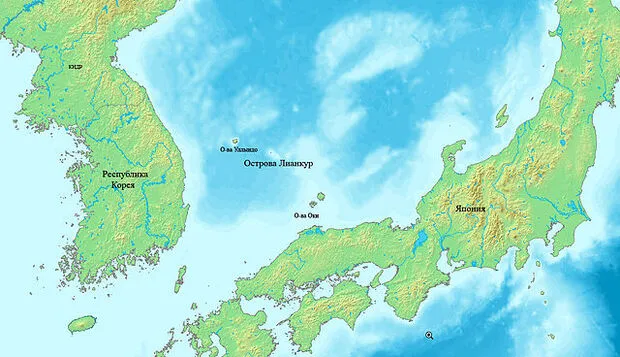
In the first place, Takeshima is an inherent territory of Japan both historically and under international law. What South Korea should do is not for the Commissioner of the National Police Agency to land on Takeshima, but to go to the International Court of Justice and seek a decision based on international law. It is clear that the landing on Takeshima was carried out to coincide with the trilateral foreign ministerial talks between Japan, the United States, and South Korea.
Strategic objectives are China and North Korea
This is related to the South Korean presidential election to be held in 2022, and is aimed at improving the current government's approval ratings, but the people most likely to be happy about this are China and North Korea. China is wary of Japan, the US, and South Korea getting closer.
That's why they started this commotion with the aim of holding talks between the vice ministers of foreign affairs between Japan, the US and South Korea. If you think about it this way, the objectives are completely consistent with what the Moon Jae-in administration has done thus far. And in this case, it can be said that that purpose was clearly demonstrated.
#img2#
Intensification of anti-Japanese activities
Since the Moon Jae-in administration came into power, the Takeshima issue has become more radical, and issues such as the Rising Sun flag, forced labor, and comfort women have all crossed the line. They are engaging in brinkmanship diplomacy that is on the verge of destroying Japan-South Korea relations.
These can be seen as an appeal to North Korea and China, and also seem to be a love call to be included in the Chinese economic bloc. The South Korean people are enthusiastic about these movements and support Moon Jae-in's popularity.
POINT South Korea wants to join China and North Korea. This has been Moon Jae-in's wish from the beginning. If you look at it that way, everything you've said and done so far makes sense.
South Korea approaches a rogue nation
North Korea and China are authoritarian countries. Japan and the United States are democratic countries, and South Korea is also supposed to be a democratic country, but I wonder if the social system doesn't matter.The one country that the Moon Jae-in administration wants to get along with after saying goodbye to Japan and the United States is the UN sanctions resolution. One country that continues to suffer is North Korea, and one country that has been criticized by Europe, the United States, and Japan is China, which has been criticized for the Hong Kong issue, the Taiwan Strait issue, and the Uighur issue.
I feel like the future direction of Korea is becoming clearer.
I'm participating in the ranking.Please click and cheer for me.
A Korean group planning to visit Germany to remove the statue of peace. Anti - Japanese activities are global. Activities to prevent it to the world. [Table of Contents]
Korean group planning to visit Germany
Activities by Koreans denouncing anti-Japanese groups
Collaboration with historians
Get the location of the prostitute rally all night
Who is the comfort women issue?
Kim Byeong-heon, director of the National History Textbook Research Institute, Lee Woo-yeon, research committee member of the Rakusei University Economic Research Institute, Juok-soon Mama Corps representative, Kenji Yoshida (Korean name Kim Min-suk), etc. He will visit the city of Berlin from the 25th to the 30th, meet with the ward office officials, and formally request the removal of the statue of the comfort woman girl installed in the area.
Director Kim and his colleagues formed the "Comfort Women Fraud Clearing Solidarity" last year and held a weekly confrontation rally for the Justice Federation's rally, revealing the falsehood of the comfort women issue symbolized by the image of comfort women.
Lee Woo-yeon is the co-author of "Anti-Japan Tribalism," which has become a bestseller in Japan, and Juok-soon held a demo rally in Korea
"Prime Minister Abe, our leader was helpless and ignorant and destroyed Japan-South Korea relations. I sincerely apologize," he said, denying the Korean government's response and defending the position of the Japanese government.
They are an organization that is in direct opposition to various anti-Japan movement groups, and are familiar with the history of the Japanese rule, such as Professor Yanagi of Yonsei University, who was sued for saying "comfort women are prostitutes". He will also collaborate with Lee Young-hoon of "Anti-Japan Tribalism", Professor Mark Ramseyer of Harvard Law School, and Tsutomu Nishioka, a visiting professor of Reitaku University in Japan.
Thorough demonstrations such as uncovering the lies of the comfort women in the immediate vicinity of the former comfort women's Wednesday rally, and securing applications for the same place all night before the notification of the Wednesday rally is issued to obstruct the activities of the comfort women. It's the first time.
As with the comfort women issue and the recruitment issue, Japan and South Korea have agreed to comprehensively resolve these issues through the 1965 Japan-Korea Claims Agreement. The problems that have arisen since then are not the problems of both countries, but the domestic problems of each. The Japanese way of thinking is that domestic problems should be solved domestically.
Will it really be a solution when their activities expand and the truth of history becomes clear? At least this is a problem that Koreans should solve. It is clear from the past that Japan's apology has twisted the facts and was only a temporary measure.
Japanese Military comfort woman A major flaw in the scrapping of the agreement is President Moon Jae In's dissolution of the Reconciliation and Healing Foundation.
The comfort women agreement is an official agreement
South Korea does not understand the agreement
2015 Comfort Women Agreement
The claim date is from 1965. Comfort women agreement establishes foundation
With the dissolution of the foundation, former comfort women cannot negotiate with Japan
In 2021, Moon Jae-in recognized the comfort women agreement as an official agreement between the governments. I wonder if these words were uttered out of a feeling that further deterioration of Japan-Korea relations would be a problem because it would affect the economy, regarding the lawsuit filed by former comfort women against the Japanese government. The problem is that the South Korean side doesn't fully understand the contents of the 2015 agreement.
Reading the comfort women agreement, it is clear that the main purpose of the agreement is for the South Korean government to establish a ``foundation'' to support former comfort women. Based on this assumption, the comfort women issue between the two countries will be finally and irreversibly resolved. In addition, we will refrain from blaming or criticizing each other regarding this issue in the international community. The Korean government will strive to resolve the issue of the girl statue in front of the Japanese Embassy in South Korea appropriately through consultations with related organizations. The order is as follows.
2015 comfort women agreement
Japanese side:
(2) The Japanese government has been sincerely addressing this issue, and based on its experience, it has recently decided to use the Japanese government's budget to heal the emotional wounds of all former comfort women. Take measures to ease the situation. Specifically, the South Korean government established a foundation for the purpose of supporting former comfort women, provided a lump sum of funds from the Japanese government's budget, and the Japanese and South Korean governments cooperated to provide support for all former comfort women. We will carry out projects to restore the honor and dignity of comfort women and heal their emotional wounds.
2. South Korean side:
(1) The Korean government evaluates the Japanese government's statements and efforts leading up to this announcement, and the Japanese government has confirmed the above 1. On the premise that the measures stated in (2) are steadily implemented, through this announcement we confirm that, together with the Japanese government, this issue will be finally and irreversibly resolved. The Government of the Republic of Korea will cooperate with the measures taken by the Government of Japan.
The comfort women agreement states that the South Korean government will establish a foundation and work through its activities to resolve issues with former comfort women.
In other words, the entire premise of this comfort women agreement was the establishment of a foundation, and as expected, Moon Jae-in dissolved this foundation. If this is recognized as an official agreement, there is an obligation to rebuild the ``Foundation for Reconciliation and Healing.'' Since this has not been done, even if South Korea says something, it will simply be bringing up a topic unrelated to the comfort women agreement. The issue of claims was resolved in 1965.
The purpose of establishing the foundation is to carry out projects to restore the honor and dignity of former comfort women and to heal their emotional wounds. Nowhere does it say that Japan should simply distribute the 1 billion yen it contributed. In other words, South Korea has abandoned its efforts to establish a foundation and restore the honor and dignity of former comfort women.
Looking at this from a different angle, with this agreement, the comfort women issue is no longer an issue between the governments of the two countries, but an issue between the foundation and the individual former comfort women. The former comfort women are demanding that Japan's prime minister meet in person and apologize, which is an unlikely request, but let's assume it happened. That can only be the result of negotiations conducted through the Reconciliation and Healing Foundation. Without the Foundation, no one can negotiate with Japan. This is not an issue of claims or human rights, but rather an issue of default by the South Korean government, which has abandoned its efforts to establish a foundation and resolve the issue.
If you confuse the claim rights issue with the comfort women agreement, you will lose sight of the essence. The major flaw in the cancellation of this agreement is that it dissolves the Foundation.
Korea's continued Jewish cosplay.All Japan - South Korea relations come to this.
Japanese Military Sexual Slavery The problem and recruitment problem are individualized, but what Korea has been talking about since the end of World War II is JewishCosplay .The Asahi flag issue is also related.South Korea tells Japan to imitate Germany because Germany compensates for the war and Japan does not.Japan invaded countries that were considered Western colonies and paid reparations to those countries.China has waived compensation.Korea was not an enemy country and there was no war damage , so the concept of compensation itself does not exist.
When it comes to Jewish cosplay, we are in the same situation as Jews.Why are Jews rescued and we have no help?Germany says it is compensating, but Germany only compensates each country comprehensive except for compensation for Jews.The logic of reparation can be seen from these things as if it had been done to Jews.The oath of the Provisional Government of the Republic of Korea clearly says, "Japan's inhumane assault " and the current preamble of the Korean Constitution says it will inherit the provisional government's legal code.So far, Nazi = Japanese equation.Therefore, it becomes the Harkencroits = Asahi flag.
What is certain to be known as a historical fact is that the Holocaust is an operation to slaughter and annihilate Jews in the vast area of Europe.Japan claims to have carried out genocide on the Korean Peninsula, but the population growth is remarkable.The U.S. says there was no Japan's war crimes under GHQ rule.MacArthur's postwar policy is to promptly convene an international military court to punish war criminals, justify the American war, and quickly bring Japan back to the international community.America was looking for war criminals.It is concluded that it was not on the Korean Peninsula.
To be clear, Japan and the Nazis, Koreans and Jews are completely different.World War II also has a completely different history.No country in the world thinks Koreans and Jews are the same.It is clear that the provisional government wants to replace Korea with Jews and pretend to be a war victim and become a victorious group.
South Korea has requested attendance at the San Francisco Peace Conference and has been rejected by the United States.At this time, I was trying to get the international community to recognize Jukdo sovereignty.
Korean group trying to stop the comfort women movement in South Korea The method is to stay up all night and reserve a space first.
Preemption of space for South Korean far-right groups began in May 2020. In the wake of allegations of misappropriation of sponsorship funds by Rep. Yoon Mi-hyang, who served as the president of the Justice and Remembrance Solidarity (a core organization in the comfort women litigation movement), far-right civic groups held a rally in front of the Statue of the Girl of Peace. They began filing reports ahead of the Justice League.
Meeting notifications can be submitted 30 days (720 hours) in advance, but members of far-right and conservative groups are staying up all night taking turns at the waiting area at Jongno Police Station, where meeting notifications are accepted. , the place is taken away every time.
Although it is a primitive method, it is amazing that they are trying to stop the comfort women movement even by staying up all night.
Kang Kyung-ran, head of the Solidarity Movement for Justice League, said, ``Far-right groups are claiming to ``end the Wednesday demonstrations forever'' and have filed a gathering at the same location. She is a prostitute () on a daily basis, and she does not hesitate to say things that insult us.
I have decided to petition the National Human Rights Commission to take urgent remedial measures and investigate the human rights violations occurring at the rally site, as well as to investigate the police who ignore these acts."
The anti-comfort women movement in South Korea is led by far-right political parties and carried out by civil society groups.
Professor Ramseyer's negative statement [There is no evidence of forced abduction of comfort women] is a complete lie. [Translated excerpt of Yonhap News article]
On January 5th, Mark Ramseyer, a professor at Harvard Law School in the United States, who defined South Korean comfort women as "prostitutes" and received international backlash, has now proven that "comfort women were forced to be recruited." It is expected that there will be a stir by asserting that there are no contemporary documents that do so.
Professor Ramseyer made this clear on the 5th in his article ``Sexual Contracts in the Pacific War: Responses to Criticism'' posted on the Harvard Law School website.
In this paper, which is a rebuttal of previous criticisms directed at her, Professor Ramseyer argues that ``Korean women were drawn into [comfort women] by the Japanese military who fought against their will, regardless of their will.'' I will respond to the allegation,'' and declared, ``This allegation is false.''
At the same time, he asserted, `` Korean women were not forced to serve as comfort stations due to planned coercion by the Japanese military.''
He specifically argued that the 1983 book ``My War Crimes'' by Japanese author and activist Seiji Yoshida was the de facto basis for the forced recruitment of comfort women.
For 35 years after the end of the war, there was no evidence (proving forced conscription). It was only in the late 1980s that some Korean women began to advocate this."
He added, ``The comfort women debate started with Yoshida's 'fraud'''' and ``Most of the experts who criticized me were from Japan and South Korea, but even though they knew about this book, no one He also didn't mention this book."
Regarding the paper in question, Professor Ramseyer said, ``The core of the paper was about the contract, such as why the comfort women received advance payment and what conditions under the contract determined the women's working hours.'' ``However, none of the criticisms leveled at me were aimed at this kind of economic analysis.''
In a paper published that day, Professor Ramseyer cited a study last year by Lee Yuken, a co-author of ``Anti-Japanese Tribalism'' and a research committee member at the University of Economics Research Institute, which received support from far-right groups in Japan.
Professor Ramseyer also claimed that comfort women victims, who remained silent for a considerable period after the war, changed their words after they began demanding reparations from Japan.
In a situation where there is no document proving forced recruitment, the only evidence, the testimonies of victims, lacks credibility..
In particular, he referred to comfort woman victim Lee Yong-soo as ``the most notorious (of all the people who changed their words)''.
[Excerpt above]
Professor Ramseyer says that no evidence of her forced abduction or her contract has been found anywhere. Similarly, the Japanese government has made a cabinet decision under the Abe administration that there is no evidence of forced recruitment.